

Most people who use moringa are familiar with the leaf powder the bright green, finely milled powder you stir into smoothies. The seed powder is its less-talked-about cousin, with a different flavor, different culinary uses, and a different role in a plant-based pantry.
The Difference Between Seed and Leaf
- Leaf powder: bright green, mild and slightly grassy, used in smoothies and yogurt.
- Seed powder: beige to light tan, more earthy and slightly bitter, used in savory cooking.
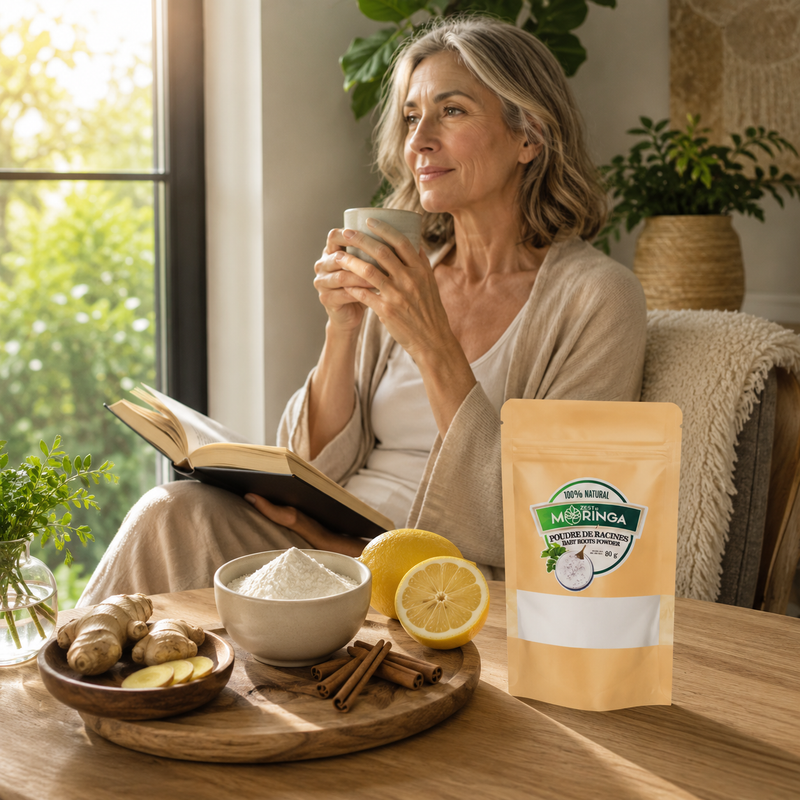
- Root powder: peppery, almost horseradish-like, used as a culinary spice in soups and dressings.
How Seed Powder Is Made
Mature moringa seeds are sun-dried, shelled, and stone-ground into a fine powder. Some producers also use the whole seed (with the husk), which is slightly more textured. The flavor profile depends on whether the seeds are raw or lightly toasted before milling.
How to Use It
- In savory dishes: a small pinch in soups, broths, lentils, and bean dishes for an earthy depth.
- In dressings: whisk a quarter teaspoon into vinaigrettes for a nutty undertone.
- In baking: blend with whole-grain flours for hearty crackers and flatbreads.
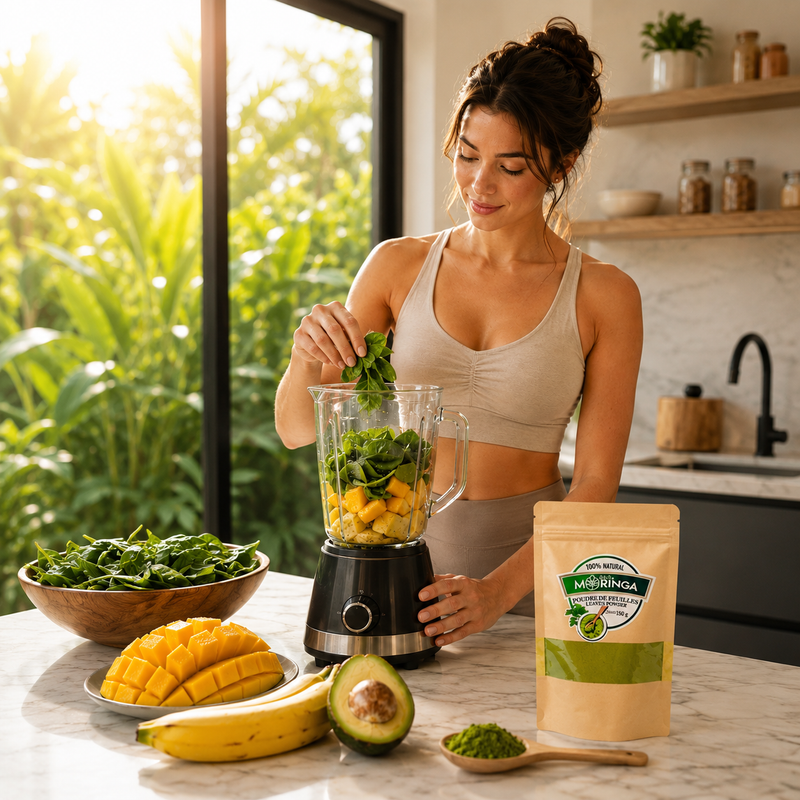
- In smoothies: works in earthy, less-sweet smoothie blends — pair with cocoa, espresso, or banana.
Whole Seeds vs. Powder
Prefer the seeds in their natural form? We also offer them raw and unsalted for chewing or planting, and roasted and lightly salted as a savory snack.
Storage
Keep the pouch sealed in a cool, dry place. Once opened, transfer to an airtight container away from heat and light to preserve flavor.
Moringa seeds are nutrient-dense; the standard daily serving is small. Speak with a healthcare professional before regular use, especially during pregnancy, nursing, or while on medication.
0 Comments