

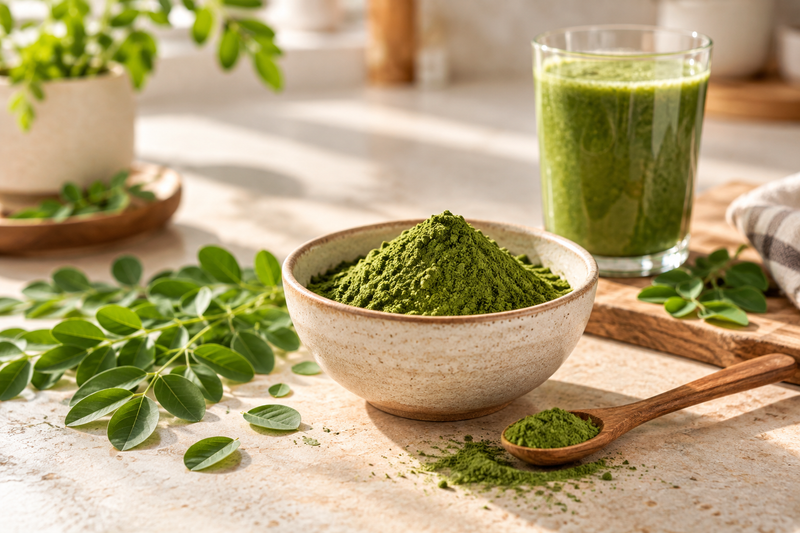
Moringa oleifera shows up in green-powder aisles around the world, but most casual buyers know surprisingly little about the actual tree behind the powder. Here are a few things you might not know about moringa.
It's One of the Fastest-Growing Trees in the World
A young moringa tree can grow up to 3 meters in a single year. In tropical climates with adequate water, the leaves are ready for first harvest within 6–8 months of planting.
Almost Every Part Is Edible
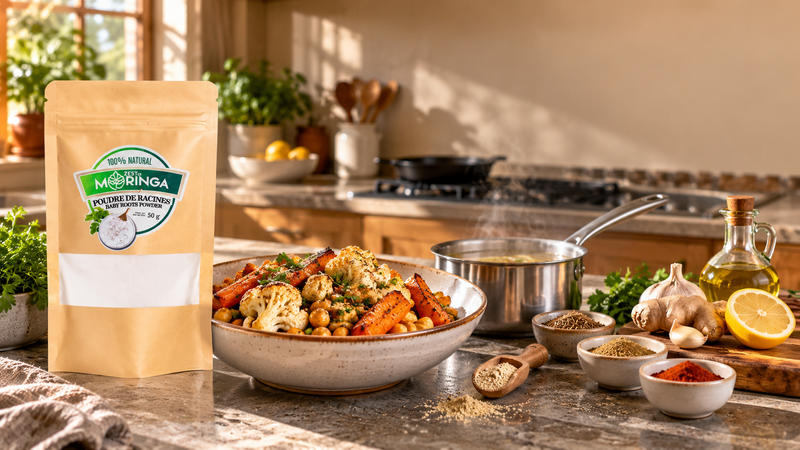
The leaves, immature seed pods, mature seeds, flowers, and even young roots have a long history of culinary use. The mature seed pods, called "drumsticks", are a staple vegetable in South Indian cooking.

The Seeds Can Purify Water
Crushed moringa seeds have traditionally been used to clarify cloudy water in regions without access to filtration. The seeds contain natural compounds that bind to particles and let them settle out. (This is a folk technique — not a substitute for proper water treatment in 2026.)
The Oil Doesn't Go Rancid Easily
Cold-pressed moringa oil has a comparatively long shelf life thanks to its high oleic acid content (similar to olive oil) and natural antioxidants. A sealed bottle stays fresh for about 12 months.
The Tree Is Native to South Asia
Despite being widely associated with Africa today, moringa originally comes from the sub-Himalayan tracts of South Asia. It was introduced to Africa, the Caribbean, and Latin America centuries ago and now grows naturally across the tropics.
You Can Plant a Moringa Tree from Our Seeds
Our natural moringa oleifera seeds are unroasted and ungerminated. If you live in a warm climate (or have a sunny indoor spot), you can soak them overnight and plant them in well-drained soil. Most germinate within 1–2 weeks.
Always speak with a healthcare professional before adding new herbs to your routine.
0 Comments