

Moringa oleifera is often described as a nutrient-dense plant, and as it grows more popular in plant-based communities one question keeps coming back: does moringa contain vitamin B12? B12 is notoriously difficult to obtain from plant sources, which makes this an important question for anyone following a vegan or vegetarian diet.
Search results are contradictory. Some pages claim moringa is a rich source of B12; others dismiss the idea entirely. This article works through what the evidence actually shows.

What Is Vitamin B12 and Why Does It Matter?
Vitamin B12, also known as cobalamin, is a water-soluble vitamin involved in several fundamental processes:
- Red blood cell formation. B12 is needed to produce healthy red blood cells, which carry oxygen through the body.
- Neurological function. It helps maintain nerve cells and is involved in the synthesis of myelin, the protective sheath around nerves.
- DNA synthesis. B12 is a key component in the creation and regulation of DNA.
- Energy metabolism. It helps convert food into usable energy.
Unlike most vitamins, B12 is not produced by plants or by animals. It is synthesised by specific microorganisms, such as bacteria and archaea, found in soil, water and the digestive tracts of animals. Animals acquire B12 by consuming those microorganisms, and the vitamin accumulates in their tissues. That is why meat, fish, eggs and dairy are the most reliable dietary sources.

The Challenge of Plant-Based B12
One of the biggest nutritional hurdles on a strict plant-based diet is obtaining enough vitamin B12. The scientific consensus is that there are no reliable, unfortified plant sources of active B12.
This is where the myths arise. Certain seaweeds, mushrooms and fermented foods are sometimes said to contain B12. In many cases what they contain are B12 analogues, sometimes called pseudo-B12, rather than the active form the body can use. These analogues can even interfere with the absorption of true B12 by occupying the same receptors.
So is moringa an exception?
What the Research Says About Moringa and B12
Some analyses of moringa leaves have detected measurable levels of vitamin B12, which is what generated the excitement in the first place. The scientific community remains cautious, for three reasons.
- Analogues. The main concern is whether what is detected is active cobalamin or an inactive analogue. Most standard testing methods cannot tell the two apart, and analogues provide none of the vitamin's benefits.
- Bioavailability. Even where active B12 is present, how much can actually be absorbed is uncertain. It may be bound within the plant's cell structure in a way that human digestion cannot easily release.
- Inconsistent and low levels. Reported amounts vary widely and are generally low, depending on soil quality, the bacteria present where the plant grew, and processing methods. The levels detected are typically well below an adult's recommended daily intake.
The honest conclusion is that while some moringa may contain traces of B12, it is not a reliable or sufficient source. Relying on moringa, or on any unfortified plant, for B12 would put someone at real risk of deficiency.
Animal Sources vs. Moringa
The B12 in animal products is highly bioavailable: when you eat meat, dairy or eggs, it is readily absorbed and used.
Any B12 in moringa powder or leaves faces multiple absorption obstacles. The fibrous structure of plants makes nutrients harder for digestive enzymes to reach, and if what is present is an inactive analogue it offers no benefit and may hinder the absorption of true B12 from elsewhere. For this particular vitamin, moringa is not a substitute for animal foods or a dedicated supplement.

How to Build a Balanced Plant-Based Routine
Moringa may not solve the B12 question, but it remains a genuinely useful addition to a plant-based diet. It naturally contains vitamins A and C, iron, calcium, plant protein and antioxidants.
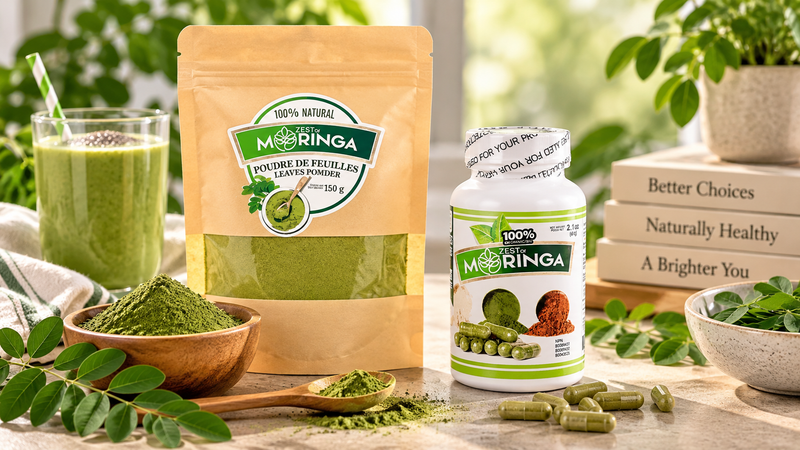
- Use nutrient-dense foods. Organic moringa leaf powder is easy to add to meals; our guide on how to use moringa powder covers the practical side. For convenience, moringa capsules do the same job without measuring.
- Do not rely on moringa for B12. It is not a sufficient source.
- Use a reliable B12 source. On a plant-based diet, that means fortified foods (some plant milks, nutritional yeast, breakfast cereals) or a dedicated B12 supplement, typically cyanocobalamin or methylcobalamin.
Combining moringa's broad nutritional contribution with a dependable B12 source gives you a well-rounded routine without nutritional gaps.
Frequently Asked Questions
So, does moringa have vitamin B12?
It may contain trace amounts, but it is not considered a reliable or sufficient source. What is present may be an inactive analogue and is unlikely to be bioavailable enough to meet human needs.
Can I use moringa instead of a B12 supplement?
No. If you follow a plant-based diet, consume B12-fortified foods or take a supplement to prevent deficiency.
What is moringa actually good for?
It is recognised for its content of vitamins A and C, iron, calcium, plant protein and antioxidants. Our article on moringa benefits goes through each part of the plant.
How much B12 do I need per day?
The recommended dietary allowance for adults is 2.4 micrograms per day. Needs may be higher during pregnancy or breastfeeding. Speak with a healthcare professional about your own requirements.
The Verdict on Moringa and B12
The idea that moringa solves the plant-based B12 problem is appealing, but the current evidence does not support it. Moringa's real strength lies in the other nutrients it contributes.
Take moringa for what it is: a nutrient-dense plant that complements a healthy diet. For B12, rely on fortified foods or supplementation.
Ready to Add Moringa to Your Routine?
If you want the full nutrient profile of moringa without expecting it to replace B12, two products are a simple place to start: Moringa Oleifera Capsules for a convenient daily dose, or organic moringa leaf powder if you prefer to blend it into smoothies and meals. You can also browse all of our moringa guides.
Zest Of Moringa products are foods, not medicines. Nothing here is intended to diagnose, treat, cure or prevent any disease.

0 Comments