

If you've come across moringa for the first time and you're trying to figure out what it actually is, this article is for you. No hype, no jargon — just a clear answer to the basic question: what is moringa oleifera?
The Plant
Moringa oleifera is a tree native to the sub-Himalayan tracts of South Asia. It's also known as the "drumstick tree" (named after its long, narrow seed pods) or the "horseradish tree" (because the roots have a peppery, horseradish-like flavor).
The tree grows easily in tropical and sub-tropical climates — including the Caribbean, parts of Africa, and Latin America — where it has become a household staple over centuries.
What Parts Are Used?
- Leaves: the most common part used today. Dried and ground into a fine green powder, or used fresh in stews and soups in tropical cuisines.
- Mature seeds: can be eaten as a snack or pressed for cold-pressed oil.
- Seed pods (drumsticks): eaten as a vegetable in South Indian cooking.
- Roots: used as a peppery cooking ingredient.
- Flowers and bark: used in some traditional preparations.
What Does It Taste Like?
The leaf has a mild, slightly grassy, lightly sweet flavor — closer to matcha than to spinach. The root is more peppery, almost horseradish-like. The seeds are bitter at first, then leave a sweet aftertaste. The cold-pressed oil is unscented.
How Is It Used Today?
Most people in 2026 use moringa in pre-packaged formats:
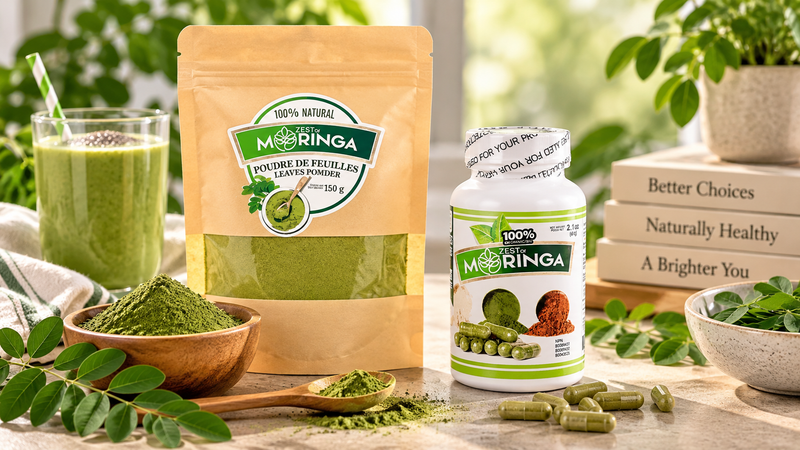
- Leaf powder for smoothies and recipes
- Loose-leaf tea for caffeine-free brewing
- Vegan capsules for a tasteless daily routine
- Cold-pressed oil for skin and hair
- Edible seeds for snacking or planting
Is It Safe?
The leaf is generally considered safe for most adults at typical daily servings (1 teaspoon of powder, ~1.5 g). The seeds and roots are more potent and should be used in smaller amounts. As with any new herb, speak with a healthcare professional before regular use, especially during pregnancy, nursing, or while on medication.
The information in this article is general in nature and is not medical advice.


0 Comments