

Le Moringa oleifera est parfois appelé « l'arbre miracle » — une étiquette marketing qui a eu des effets à la fois positifs et négatifs sur la réputation de la plante. Voici un aperçu plus pratique et moins sensationnel de ce que chaque partie du moringa offre réellement.
La feuille
La feuille est le produit de moringa le plus connu. Séchée et réduite en poudre de feuilles, elle est naturellement une source de fibres végétales, de protéines végétales et de minéraux comme le fer, le calcium et le magnésium — le genre de profil que l'on attend d'un légume-feuille. Le thé en vrac infusé à partir de la feuille séchée est une option sans caféine pour tout moment de la journée.
La graine
Les graines de moringa sont la source de l'huile de moringa. Les graines elles-mêmes sont comestibles — disponibles crues ou grillées et salées — et ont été utilisées comme collation et ingrédient culinaire dans les cuisines traditionnelles des Caraïbes et d'Asie du Sud.
L'huile
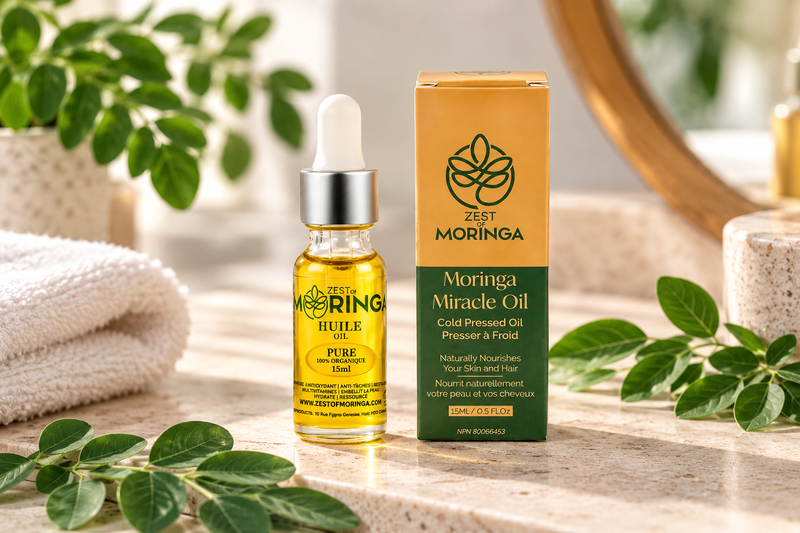
L'huile de moringa pressée à froid à partir des graines est une huile légère et non comédogène utilisée en soins de la peau pour sa texture douce et rapidement absorbée. Elle est naturellement riche en acide oléique (similaire à l'huile d'olive) et convient au visage, aux cheveux, à la barbe et aux zones corporelles sèches.
La racine
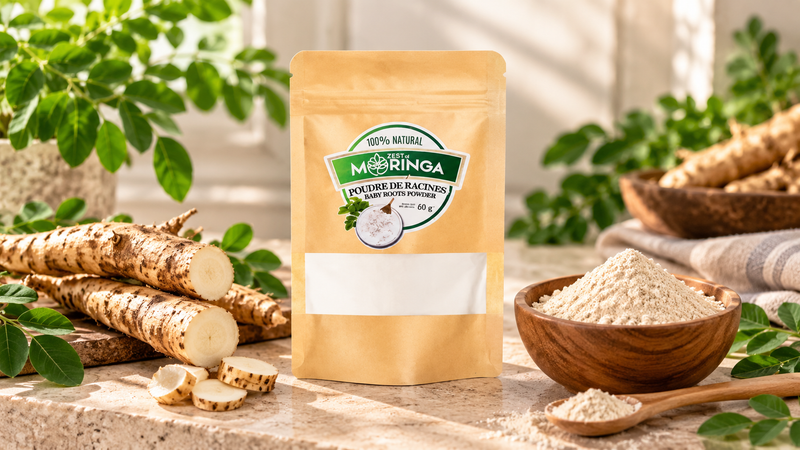
Moins connue, la racine a une saveur poivrée distinctive — plus proche du raifort que de la feuille. La poudre de racine est principalement utilisée dans la cuisine salée : soupes, bouillons, sauces.
Une présentation honnête
Le moringa est un ingrédient végétal utile et polyvalent. Ce n'est pas un remède à une quelconque affection, pas une solution de perte de poids, et pas un substitut à une alimentation équilibrée, au sommeil ou à l'activité physique. Utilisé comme un composant d'une routine axée sur les plantes, c'est un moyen simple d'ajouter de la variété à votre journée.
Consultez un professionnel de la santé avant d'ajouter de nouvelles herbes à votre routine. Les informations contenues dans cet article sont de nature générale.

0 Comments