

How to Choose Moringa Powder: 7 Signs of Good Quality
You search for moringa powder online.
One pouch is bright green.
Another is olive brown.
One costs twice as much as another.
Some labels say "organic." Others say "superfood," "premium," "pure," or "natural."
So how do you actually know whether you're buying good moringa powder?
The front of the package doesn't tell the whole story.
Everything from the part of the plant used to how the leaves are dried, ground, packaged and stored can influence the final powder.
Here are seven practical things to look for before choosing one.
1. Start With the Ingredient List
This is the easiest check.
Turn the package around and read what's actually inside.
For a pure moringa leaf powder, the ingredient list should be remarkably simple:
Moringa oleifera leaf powder.
That's it.
Some green powders combine moringa with ingredients such as spirulina, matcha, wheatgrass or other greens.
There's nothing inherently wrong with a blend but it isn't the same thing as buying pure moringa.
If you're specifically looking for moringa leaf powder, choose a product that clearly identifies what you're getting.
Zest of Moringa Organic Moringa Leaf Powder contains 100% organic Moringa oleifera leaf powder, with no fillers, preservatives, added sugar, or artificial colours or flavours.
2. Look at the Colour
Open a fresh pouch of moringa powder and one of the first things you'll notice is its colour.
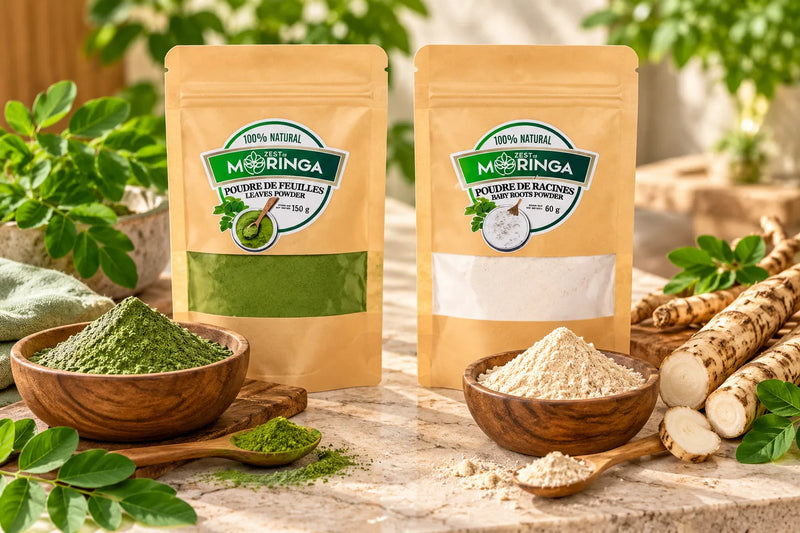
Quality moringa leaf powder should generally have a recognizable natural green appearance.
Why?
Because it's made from green moringa leaves.
However, don't expect every batch to look exactly identical.
Moringa is an agricultural product.
Growing conditions, harvest timing and natural variation can produce subtle differences between batches.
What should make you look more closely is powder that appears unusually dull, heavily browned or otherwise inconsistent with dried green leaves.
Colour isn't proof of quality by itself, but it's a useful clue.
3. Smell the Powder
Your nose can tell you quite a bit.
Fresh moringa leaf powder has a recognizable green, vegetal aroma.
Think somewhere in the world of:
Leafy greens • dried herbs • green tea • freshly cut plants
It shouldn't require artificial flavouring to smell fresh.
If you've had an opened pouch sitting in a warm, humid cupboard for a very long time and its aroma has changed significantly, that can also tell you something about how the product has been stored.
Look, smell, then taste.
Those three senses provide useful information before you ever add it to a recipe.

4. Check How the Leaves Were Processed
The journey from tree to pouch matters.
Fresh moringa leaves contain a lot of moisture, so they need to be dried before they can become powder.
But there are different approaches to drying and milling.
When comparing brands, look for companies that actually explain how their powder is produced rather than simply describing it as "premium."
Questions worth asking include:
How are the leaves dried?
How is the dried leaf milled?
Does the company identify the part of the plant used?
Where does the moringa come from?
Zest of Moringa says its leaves are gently dried at low temperature and stone-ground into a fine powder.
Those are useful details because they tell you more than a generic marketing term such as "high quality."
5. Pay Attention to Texture
Moringa leaf powder should actually look and behave like powder.
A finely milled product is easier to incorporate into:
- Smoothies
- Yogurt
- Oatmeal
- Juices
- Sauces
- Soups
- Hummus
- Pesto
- Baking recipes
Zest of Moringa's product is stone-ground into a fine powder and is intended for these kinds of everyday applications.
Remember, though, that moringa isn't an instant drink mix.
It's ground plant material.
If you stir it into plain water, you shouldn't necessarily expect it to dissolve invisibly like sugar.
Mixing, shaking or blending helps distribute it more evenly.
6. Know What Moringa Powder Should Taste Like
Good moringa powder doesn't taste like vanilla protein powder.
And it shouldn't.
Moringa leaf has its own character.
Expect a flavour that is:
Green
Earthy
Vegetal
Slightly grassy
That's why moringa works so naturally with ingredients such as banana, mango, pineapple, berries, yogurt, citrus and avocado.
If you're trying it for the first time, don't begin by adding a huge spoonful to plain water.
That's a difficult introduction to almost any concentrated green ingredient.
Start small.
Zest of Moringa recommends approximately ½ to 1 teaspoon in smoothies, yogurt, oatmeal, chia pudding, juices or other foods, then adjusting according to preference.
7. Look for Traceability, Not Just Buzzwords
Words like:
Premium
Superfood
Natural
Pure
can sound impressive.
But they're much less informative than knowing where and how a product was made.
When evaluating a moringa brand, look for information about:
Where the moringa was grown
Which part of the plant was used
How it was processed
Where it was packaged
What else is in the product
The more transparent a company is about its supply chain, the easier it is for you to understand what you're purchasing.
Zest of Moringa identifies its moringa as coming from its family-grown Caribbean plantation, with the finished product bottled in small batches in Montréal.
What Should Be in Moringa Leaf Powder?
This sounds obvious, but it's an important distinction.
Moringa is a tree with:
Leaves
Seeds
Pods
Roots
and other plant material.
These parts aren't interchangeable.
If you're buying moringa leaf powder, the product should clearly identify the leaves as the ingredient.
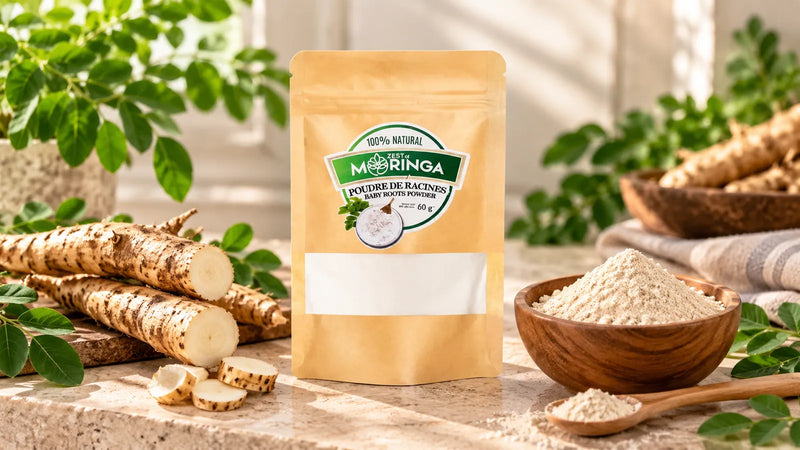
This is particularly important because moringa root powder is also sold separately and has a much stronger, more peppery character than leaf powder.
Don't assume every package labelled "moringa powder" is necessarily the same product.
Read the ingredient list.
Organic Moringa Powder vs. Regular Moringa Powder
Another question shoppers commonly encounter is whether to choose organic.
If organic certification matters to you, look for an actual certification statement rather than assuming a green package or the word "natural" means organic.
"Natural" and "organic" aren't automatically interchangeable terms.
The Zest of Moringa leaf powder is sold as certified organic, and the product page identifies USDA and ECOCERT certification.
The important point isn't that every person must buy organic.
It's that you should know what you're paying for.
How Should Moringa Powder Be Packaged?
Packaging isn't just about making a product look attractive.
Powders need protection from their environment.
Once you open a pouch repeatedly, you're exposing its contents to:
Air • Light • Heat • Moisture
That's why resealable packaging is useful.
After each use:
- Make sure your spoon is dry.
- Remove the amount you need.
- Push excess air from the pouch where practical.
- Seal it properly.
- Return it to a cool, dry place away from direct sunlight.
Don't leave the pouch sitting open beside a steaming blender or kettle.
Moisture and powder are not good roommates.
What About Clumping?
A small amount of natural clumping doesn't automatically mean something is wrong.
Fine plant powders can compress during shipping and storage.
However, significant moisture inside the pouch is another matter.
Always use a clean, dry spoon.
If a product develops an unusual smell, appearance or obvious signs of moisture or spoilage, don't continue using it simply because the expiration date hasn't arrived.
How to Compare Two Moringa Powders
Next time you're choosing between two products, don't start with the front label.
Turn them around.
Use this quick checklist:
| What to Check | What to Look For |
|---|---|
| Ingredient | Clearly identified moringa leaf powder |
| Colour | Natural green appearance |
| Aroma | Fresh, green, vegetal |
| Texture | Finely milled |
| Processing | Clearly explained |
| Origin | Traceable sourcing |
| Additives | Check for fillers or unnecessary ingredients |
| Organic claim | Look for certification if important to you |
| Packaging | Properly sealed and resealable |
| Directions | Clear instructions for use |
No single characteristic proves quality.
Instead, look at the whole picture.
Don't Choose Moringa Based on the Biggest Promise
There's one more useful quality check and it has nothing to do with colour.
Look at the claims being made.
Be cautious when moringa is presented as something that will supposedly:
cure diseases
guarantee weight loss
replace medication
or produce dramatic results overnight.
Moringa leaf powder is a plant-based food ingredient.
It doesn't need miracle promises to be interesting.
You can use it because you enjoy experimenting with plant ingredients, because it fits into your smoothies and recipes, or simply because moringa is part of the food traditions you want to explore.
That's enough.
A Simple Test When Your Moringa Arrives
When you receive a new pouch, take 30 seconds before putting it in the cupboard.
LOOK
Notice the natural green colour.
SMELL
Look for a recognizable green, vegetal aroma.
READ
Confirm the ingredient list.
MIX
Try a small amount in something familiar.
A banana or mango smoothie is an easy starting point.
STORE
Seal the pouch properly and keep it away from heat, moisture and direct sunlight.
That's a much more useful quality check than relying on whatever buzzword happens to be printed largest on the package.
Meet Zest of Moringa Organic Moringa Leaf Powder
Zest of Moringa Organic Moringa Leaf Powder is made from carefully selected Moringa oleifera leaves that are gently dried at low temperature and stone-ground into a fine powder.
The ingredient list is intentionally short:
100% Organic Moringa Oleifera Leaf Powder.
No fillers.
No preservatives.
No added sugar.
No artificial colours or flavours.
Use approximately ½–1 teaspoon in a smoothie, yogurt, oatmeal or another favourite recipe, starting small if you're new to its distinctive green flavour.
Sometimes knowing what isn't in your food is just as useful as knowing what is.
0 Comments