

Tres generaciones de cultivadores. Una bolsita verde. Quince formas reales de usarla. Bienvenido a la guía honesta, sin el «echa una cucharadita a cualquier cosa».
Compraste el polvo. La bolsa lleva días en la encimera o al fondo de un armario. La abriste una vez, echaste un poco en algo, no supiste si lo hacías bien, y ya ha pasado una semana.
No eres el único. Es la conversación que más tenemos con nuestros clientes.
Esto es lo que hemos aprendido en sesenta años cultivando, moliendo y comiendo moringa: las formas en que la usa de verdad la gente de nuestra plantación caribeña, las recetas que nuestra abuela prepara cada mañana, y los pequeños gestos diarios que convierten una bolsa de polvo en un ritual de verdad.
Lo esencial (si solo lees lo que va en negrita)
Empieza con 1 cucharadita al día. Añádela a cualquier cosa fría o a temperatura ambiente: batidos, zumo, avena, yogur. Deja la cocina salada para cuando lleves tres o cuatro días. Guarda la bolsa cerrada y lejos del sol. No la hiervas. No la metas en la nevera. Y no esperes que no sepa a nada: la moringa tiene carácter.
Primero, ¿a qué sabe realmente el polvo de moringa?
Aquí la honestidad importa. Casi todos los artículos dicen «terroso y algo herbáceo» y te dejan descifrar eso a las 7 de la mañana con la boca llena de batido. Seamos concretos:
Nuestro polvo de hoja de moringa orgánico sabe al interior de una verdura verde recién cortada, ligeramente dulce, con un punto de matcha y un final limpio. No es amargo cuando está fresco y bien molido (mucha moringa barata amarga porque las hojas se secaron demasiado calientes o se almacenaron demasiado tiempo). El sabor está más cerca de las espinacas con té verde que de la hierba de trigo.
Una cucharadita desaparece por completo en un batido de fruta. ¿Dos cucharaditas en agua sola? La notarás. Esa es la cuenta.
Cómo comprarlo: cuatro cosas que revisar
Casi todo lo que hace buena o mala a una moringa se decide antes de que te llegue. Cuatro comprobaciones:
1. Un solo ingrediente. Muchos polvos «de moringa» son mezclas cortadas con matcha, espirulina o té verde. No son necesariamente malos, pero la parte de moringa es mucho menor de lo que sugiere la etiqueta, y estás pagando precio de moringa por relleno. Lee la lista de ingredientes, no el frente del paquete.
2. Color y olor. Un polvo de hoja fresco y bien secado es de un verde intenso y vivo, y huele a verde, como hierba recién cortada o matcha. Un caqui apagado o un marrón amarillento, con olor a heno, significa que se secó con calor, se molió demasiado caliente o pasó demasiado tiempo expuesto a la luz.
3. Cómo se procesó. Secado a la sombra y molido en piedra en lotes pequeños conserva el color y el sabor. El secado industrial a alta temperatura es más rápido y barato, y se nota.
4. De dónde viene. Una región de cultivo con nombre y un productor con nombre son señal de trazabilidad. «Producto de varios países» no lo es.
La dosis correcta, y cuándo tomarla
Mantente en 1 o 2 cucharaditas al día (unos 2 a 4 gramos). Más no es mejor, y las cantidades grandes pueden sentar mal a un estómago sensible. Puedes tomarlo todo de una vez o repartirlo en dos comidas, lo que de verdad vayas a mantener.
Una bolsa de 150 g son unas 100 porciones de 1,5 g, es decir unos tres meses a una cucharadita al día.
El momento importa menos de lo que se dice. Nosotros la tomamos por la mañana porque es cuando come nuestra familia, no porque exista una ventana metabólica. Si te va mejor por la noche, por la noche está bien. La única regla útil: tómala con algo de grasa (yogur, leche, crema de frutos secos, aguacate) para ayudar a absorber las vitaminas liposolubles A, E y K.
Sobre la composición: la hoja de moringa es naturalmente fuente de fibra vegetal, proteína vegetal y minerales como hierro, calcio, magnesio y potasio. Los valores exactos varían de lote a lote y dependen de las condiciones de cultivo, por eso no imprimimos una declaración nutricional fija en un producto natural. El polvo es vegano, vegetariano, sin gluten, sin lácteos, sin soja y sin frutos secos.
Cinco rituales de la mañana
La mayoría usa la moringa por la mañana. Estas son las cinco formas que hemos visto durar más tiempo, es decir, las recetas que la gente mantiene durante meses, no las que quedan bonitas en Instagram una semana.
1. El batido verde honesto
Olvídate de la versión de catorce ingredientes. La receta de verdad:
- 1 plátano congelado
- 180 ml de leche de almendra o de coco
- 1 puñado de espinacas o kale
- 1 cucharada de crema de almendra
- 1 cucharadita de polvo de moringa
- Una pizca de sal marina
Bate 45 segundos. Bébelo en 10 minutos (la oxidación apaga el verde con el tiempo). El plátano y la crema de almendra llevan el sabor de la moringa: la notas como una nota verde suave, no como un golpe.
2. Latte de moringa (la alternativa al «matcha verde»)
Es del que más se enamoran los clientes, y no tiene cafeína, así que encaja en esa parte de la tarde donde un segundo café no encajaría.
- 1 cucharadita de polvo de moringa
- 1 cucharadita de miel cruda o sirope de arce
- 2 cucharadas de agua caliente (no hirviendo, apunta a unos 75 °C)
- 250 ml de leche de avena o entera, calentada
Bate la moringa con el agua caliente y el endulzante hasta que quede lisa, y vierte la leche caliente por encima. Sabe a un latte de matcha más dulce y suave.
3. Mezclada en yogur o avena
La forma más perezosa de hacerlo con constancia. Una cucharadita en un bol de yogur natural o de avena cocida, con miel y frutos rojos. La grasa del yogur o de la avena, sobre todo si la cueces con leche, transporta los nutrientes. Nosotros lo hacemos casi todas las mañanas en la plantación.
4. El shot de la mañana
Si tienes licuadora o compras zumo recién exprimido: 120 ml de zumo de naranja fresco + ½ cucharadita de moringa + un chorrito de lima. Agita en un tarro pequeño. La acidez ilumina el sabor de la moringa, y la vitamina C ayuda a absorber el hierro. Bébelo de un trago.
5. El bol de energía sin receta
Bol de açaí, smoothie bowl, gachas del desayuno, sea cual sea tu base. Espolvorea media cucharadita de moringa por encima con la granola, las semillas de chia y la fruta. No la notarás. Queda preciosa. Es la forma más fácil de presentarle la moringa a tu pareja o a un niño sin resistencia.
Cuatro formas de usarla en cocina salada
Casi nadie llega hasta aquí. Deberían. La moringa se come como verdura de hoja en el sur de Asia, el Caribe y parte de África, mucho antes de que nadie la llamara «superalimento». El polvo son solo hojas secas: trátalo como una hierba verde finamente molida.
6. En sopas (fuera del fuego)
Es lo más parecido a cómo se come la moringa tradicionalmente en casa, donde las hojas frescas se añaden a la sopa al final de la cocción. Con el polvo: apaga primero el fuego y luego incorpora 1 cucharadita en un bol de sopa caliente, de lentejas, de pollo, de verduras, de calabaza, cualquier caldo.
7. Batida en aliños de ensalada
Aceite de oliva, limón, mostaza de Dijon, ajo, una cucharadita de moringa, sal y pimienta. Bate. Vierte sobre una ensalada verde sencilla. El amargor de la mostaza y la viveza del limón equilibran la moringa a la perfección: este es el aliño de nuestra mesa familiar al menos dos veces por semana.
8. Pesto, pero más verde
Receta clásica de pesto de albahaca (albahaca, piñones o nueces, parmesano, ajo, aceite de oliva, limón) más 1 cucharada de polvo de moringa. Bate. La moringa oscurece el color hacia un verde casi esmeralda y empuja el sabor más hacia el «huerto» que hacia la charcutería italiana. Mezcla con pasta, unta en tostadas, pon sobre verduras asadas.
9. Espolvoreada sobre huevos y tostada de aguacate
Cuando tengas delante un huevo frito o una tostada de aguacate, espolvorea una pizca pequeña de moringa por encima, con sal en escamas y aceite picante. La grasa del huevo o del aguacate la transporta. Suena sencillo porque lo es. También es la versión que más dura en las casas de verdad.

Tres usos dulces (sí, de verdad)
10. Bolitas energéticas sin horno
- 1 taza de dátiles Medjool sin hueso
- ½ taza de almendras crudas
- 2 cucharadas de cacao en polvo
- 2 cucharadas de coco sin azucarar
- 1 cucharada de polvo de moringa
- Una pizca de sal marina
Tritura todo a golpes en un procesador hasta formar una masa pegajosa. Forma 12 bolitas. Refrigera. Una bolita es un tentempié de verdad con cerca de un cuarto de cucharadita de moringa: perfecto para niños, para la bolsa del gimnasio o para las reuniones de las 4 de la tarde. Aguantan dos semanas en la nevera.
11. En repostería, con una proporción que funciona
La regla fiable: sustituye 1 o 2 cucharadas de harina por polvo de moringa en magdalenas, tortitas, bolitas energéticas o panes rápidos. Más cantidad y la textura se vuelve densa y el sabor pasa a primer plano.
En los brownies de chocolate puedes ser más generoso: añade 1 cucharada a una masa normal y no la notarás en absoluto, porque el cacao enmascara la moringa por completo. Así conseguimos que los escépticos de la familia sigan comiéndola.
12. Pudin de chia y coco
Mezcla 3 cucharadas de semillas de chia + 250 ml de leche de coco + 1 cucharadita de sirope de arce + ½ cucharadita de moringa + 1 cucharadita de vainilla. Refrigera toda la noche. Cubre con mango o frutos rojos frescos por la mañana. Verde intenso, dulce, con textura de gel, listo antes de que te despiertes.
Dos usos para la piel y el cuerpo
La moringa tiene una larga historia de uso tópico: las hojas se molían en pastas para la piel mucho antes de tomarse como suplemento.
13. La mascarilla de cinco minutos
- 1 cucharadita de polvo de moringa
- 1 cucharadita de miel cruda
- 2 cucharaditas de yogur natural (o gel de aloe para piel sensible)
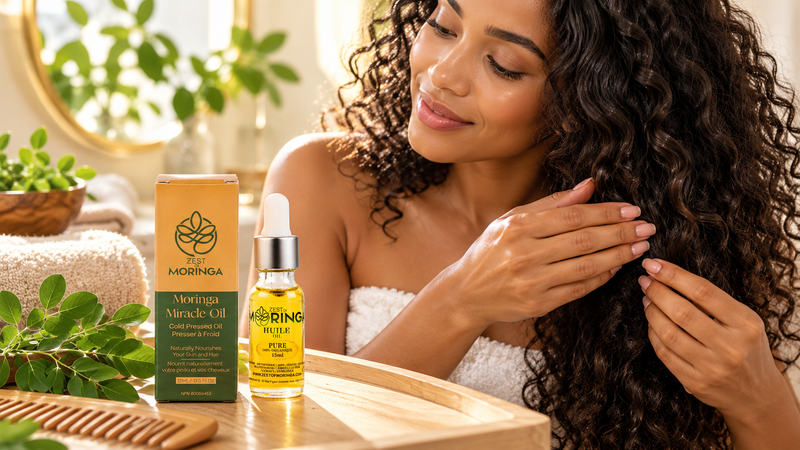
Mezcla hasta formar una pasta. Aplica sobre piel limpia, evitando el contorno de ojos. Deja 8 o 10 minutos. Aclara con agua tibia. Termina con unas gotas de nuestro sérum facial de aceite dorado de moringa. Haz primero una prueba en una zona pequeña, y sáltatela si tu piel es reactiva.
14. Enjuague para el cuero cabelludo
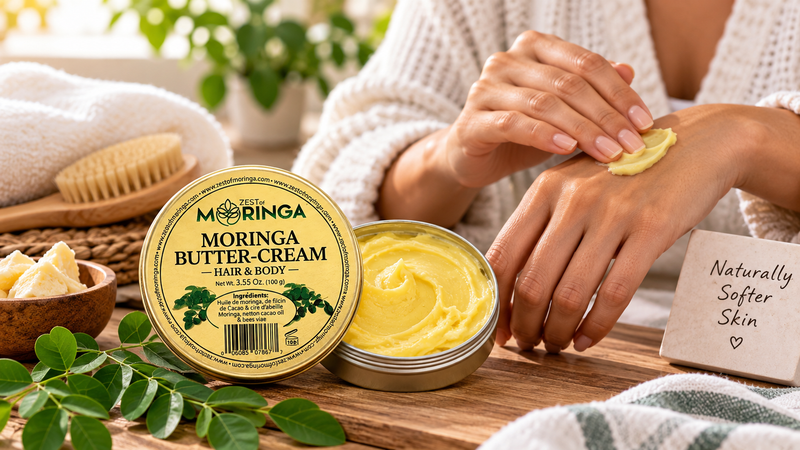
Infusiona 1 cucharadita de polvo de moringa en 250 ml de agua caliente durante 5 minutos. Cuela (un filtro de café de papel sirve). Deja enfriar a temperatura ambiente. Después del champú, vierte sobre el cuero cabelludo y masajea 60 segundos, luego aclara ligeramente con agua fresca. Un paso semanal suave, especialmente agradable junto a nuestra manteca-crema de moringa como tratamiento sin aclarado.
Uno inesperado
15. A las plantas de casa también les gusta
Truco viejo de plantación: mezcla ¼ de cucharadita de polvo de moringa en un litro de agua a temperatura ambiente, déjalo reposar una hora y riega tus plantas una vez al mes. Nuestra abuela lo hace con sus tomateras. A los potos y las monsteras también parece gustarles.
Cuatro cosas que no hay que hacer
La forma más rápida de desperdiciar buena moringa es hacer una de estas.
No la hiervas. El calor alto y sostenido (por encima de 80 °C) degrada parte de la vitamina C y de los compuestos sensibles al calor, y apaga tanto el color como el sabor. Por eso decimos «fuera del fuego» para las sopas y «no hirviendo» para el latte.
No dejes la bolsa abierta. La moringa se conserva bien, pero pierde color y sabor expuesta a la luz y al aire. Después de abrirla, dobla bien la bolsa, ciérrala con una pinza y guárdala en un cajón o armario fresco, no en la encimera a plena luz. Un tarro de cristal bien cerrado es aún mejor.
No la metas en la nevera. Esta sorprende. La nevera es húmeda, y la condensación apelmaza el polvo y apaga el color. Un armario fresco y seco gana a la nevera siempre.
No la mezcles con algo hirviendo nada más levantarte. Mismo principio del calor. Deja que tu café o tu té bajen a temperatura de beber, y entonces incorpórala.
Preguntas frecuentes
¿Cuánto dura una bolsa?
Una bolsa de 150 g son unas 100 porciones de 1,5 g cada una, es decir unos tres meses a una cucharadita al día, o seis semanas a dos.
¿Puedo tomarla con café?
Sí, pero espera a que el café baje de la temperatura de quemar. La moringa no tiene cafeína, así que no suma ni interfiere con ella.
¿Es segura la moringa en el embarazo o la lactancia?
Las hojas y el polvo tienen una larga historia de uso tradicional en cantidades alimentarias. Dicho esto, cada embarazo es distinto: consulta con tu médico o matrona antes de añadir nada nuevo, incluidos nuestros productos. La semilla y la raíz de moringa son más potentes que la hoja y no se recomiendan durante el embarazo.
Polvo, cápsulas o té: ¿qué elijo?
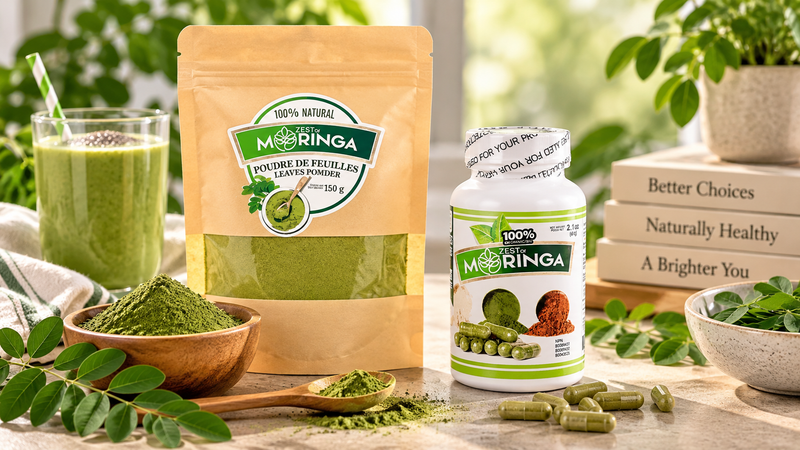
Polvo si quieres máxima flexibilidad (cocina, batidos, recetas). Cápsulas si quieres el hábito diario más fácil posible y no quieres saborearla. Té si quieres un ritual tranquilo. Es la misma moringa de un solo ingrediente de nuestra plantación familiar, solo en formatos distintos. Muchos clientes usan los tres, por eso creamos el Daily Moringa Bundle.
¿Puedo dársela a mis hijos?
Los niños mayores de dos años pueden tomar cantidades pequeñas, alrededor de un cuarto de cucharadita, mezclada en un batido o en yogur. Como con todo, habla antes con tu pediatra si tu hijo tiene alguna condición de salud o toma medicación.
¿Caduca?
Nuestro polvo está en su mejor momento dentro de los 18 meses tras la cosecha. No se estropea en un sentido peligroso: pierde color y sabor poco a poco. Guárdalo fresco, seco y lejos de la luz. Si alguna vez huele raro o se ve descolorido, reemplázalo.
Lo que la moringa no es
Merece decirse claramente, porque buena parte de internet no lo hará. La moringa no es un medicamento, no es un producto para adelgazar, y no sustituye a una dieta equilibrada. Es una verdura de hoja en polvo, con una larga historia de uso diario y corriente en los lugares donde crece. Ese es todo el discurso, con honestidad.
Lo que hay que recordar
Elige dos o tres de estas quince formas, un ritual de mañana, un uso salado y uno ocasional, y manténlas durante un mes. Esa es toda la estrategia.
Si estás empezando, nuestro Kit Descubrimiento te da el polvo, el té y el aceite facial con descuento. Si la moringa ya forma parte de tu vida, la colección Polvos y Suplementos reúne el polvo de hoja, el de raíz y las cápsulas.
Escrito por el equipo de Zest of Moringa. Tres generaciones de cultivadores familiares, una plantación caribeña, un taller en Montreal y un solo ingrediente. Siempre.
Los polvos Zest Of Moringa son alimentos, no medicamentos. Nada de lo aquí escrito pretende diagnosticar, tratar, curar ni prevenir ninguna enfermedad. Este artículo es de carácter general y no constituye consejo médico ni nutricional. Consulta a un profesional de la salud antes de añadir cualquier planta nueva a tu rutina, especialmente durante el embarazo, la lactancia o si tomas medicación.
0 Comments