

How to Cook With Moringa Root Powder: 7 Savory Ideas to Try
Most people meet moringa as a bright green leaf powder.
They add it to smoothies, yogurt or oatmeal.
But moringa root powder is completely different.
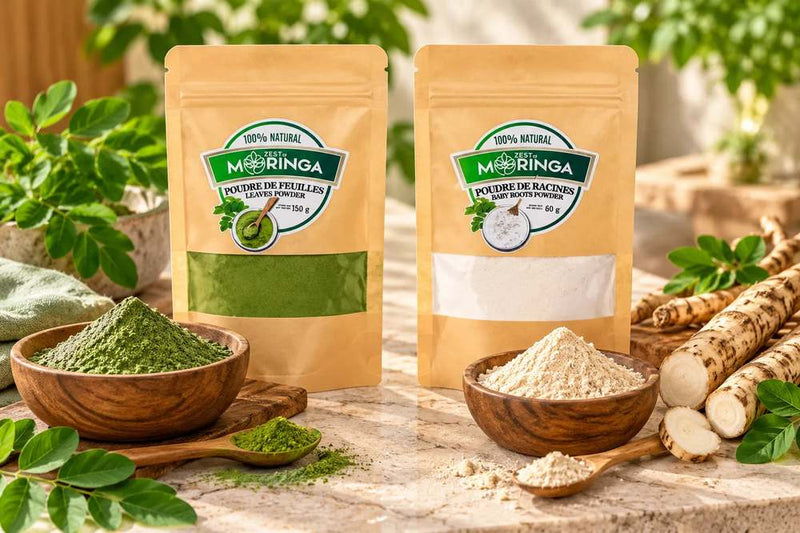
Made from the root of the Moringa oleifera tree, it has a stronger, earthier and noticeably more peppery flavor than moringa leaf powder. Zest of Moringa describes its root powder as a single botanical ingredient made from dried, stone-ground moringa root, with no leaf, stems or fillers.
That distinctive flavor means you don't have to treat moringa root powder like a green supplement.
You can treat it more like a botanical seasoning.
Here are seven practical ways to experiment with it in savory cooking.
First: What Does Moringa Root Powder Taste Like?
Before cooking with an unfamiliar ingredient, taste matters.
Moringa root powder has a flavor profile that can be described as:
Earthy • Peppery • Pungent • Warm • Botanical
It's much stronger than moringa leaf powder and can lean toward the flavor territory of horseradish or wasabi.
That's why a little goes a long way.
Instead of adding a tablespoon to a recipe, think in terms of a pinch or approximately ¼ teaspoon to start. Zest of Moringa's current product directions similarly recommend beginning around ¼ teaspoon.
You can always add more.
Taking it back out is considerably harder.
1. Add a Pinch to Vegetable Soup
Soup is one of the easiest places to begin.
Try moringa root powder in:
- Lentil soup
- Carrot soup
- Pumpkin soup
- Tomato soup
- Vegetable soup
- Chickpea soup
Prepare your soup normally.
Near the end of cooking, stir in a small pinch of moringa root powder.
Taste.
Then decide whether you want more.
The objective isn't to make the entire bowl taste like moringa root. You're using it as another layer of seasoning.
Easy Pairing
Try:
Carrot + ginger + garlic + moringa root
The sweetness of carrots provides an interesting contrast to the root's peppery character.
2. Give Broth a Peppery Botanical Note
A warm broth provides another simple introduction.
Start with vegetable broth and add:
Fresh ginger
Garlic
A squeeze of lemon
A small pinch of moringa root powder
Allow the flavors to come together, then taste before adding more.
This preparation lets you experience the root's distinctive flavor without hiding it behind too many other ingredients.
3. Make a Moringa Root Vinaigrette
You don't need to put moringa directly on your salad.
Put it in the dressing.
Try combining:
3 tablespoons olive oil
1 tablespoon fresh lemon juice
1 teaspoon Dijon mustard
A small pinch of moringa root powder
Salt and black pepper to taste
Whisk until combined.
Taste before adding additional root powder.
The mustard, citrus and peppery moringa root naturally belong in a similar flavor family.
Use the dressing on leafy salads, roasted vegetables or grain bowls.
4. Add It to a Vegetable Marinade
Moringa root powder can also become part of a simple savory marinade.
Combine:
Olive oil + lemon + garlic + ginger + herbs + a pinch of moringa root powder
Use the mixture with vegetables or tofu before roasting or grilling.
The important word is again:
pinch.
Moringa root is stronger than leaf powder, so you don't need much to change the flavor of a recipe.

5. Create a Moringa Root Spice Blend
This is where things become interesting.
Instead of using moringa root powder alone, combine it with familiar spices.
Try:
Earthy Moringa Spice Blend
2 teaspoons smoked paprika
1 teaspoon ground cumin
1 teaspoon ground coriander
½ teaspoon garlic powder
¼ teaspoon moringa root powder
Salt to taste
Mix everything together and store it in a small airtight spice jar.
Use a little on:
Roasted potatoes • cauliflower • carrots • chickpeas • tofu
This approach lets moringa root become part of the overall flavor rather than dominating it.
6. Stir a Little Into Hummus or Tahini
Moringa root powder also pairs naturally with ingredients that already work well with lemon and garlic.
For hummus, prepare your usual recipe using chickpeas, tahini, lemon, garlic and olive oil.
Then add a very small pinch of moringa root powder.
Blend again.
Taste.
For an even simpler option, whisk a pinch into a tahini-lemon sauce.
Try:
Tahini + lemon + water + garlic + moringa root powder
Drizzle it over roasted vegetables or grain bowls.
7. Experiment With Savory Sauces
Sauces are one of the easiest places to experiment because you can taste as you go.
A tiny amount of moringa root powder can be incorporated into:
Tomato sauces
Curry sauces
Garlic sauces
Miso-based sauces
Homemade vegetable gravies
Start with a very small quantity.
Stir thoroughly.
Taste.
Then adjust.
Your goal should be a subtle peppery note not a sauce where moringa root overwhelms everything else.
What Flavors Pair Well With Moringa Root Powder?
Because moringa root is earthy and peppery, certain ingredients make particularly natural partners.
Try pairing it with:
Lemon — adds acidity and brightness.
Garlic — works naturally with savory recipes.
Ginger — complements the root's warmth.
Mustard — pairs with its peppery character.
Cumin — adds earthy depth.
Coriander — brings aromatic balance.
Smoked paprika — contributes warmth and smokiness.
Tahini — gives richness and balances stronger flavors.
Miso — adds savory depth.
These are also among the kinds of pairings highlighted in Zest of Moringa's existing culinary guidance for root powder.
What Doesn't Pair as Naturally?
Moringa root powder isn't moringa leaf powder.
That distinction becomes especially important in recipes.
Its strong peppery character generally makes it better suited to savory cooking than sweet dishes. Your existing culinary guide similarly recommends root powder for savory applications rather than sweet baking and yogurt.
So before putting it into:
Vanilla desserts
Sweet muffins
Fruit yogurt
Sweet breakfast bowls
consider whether moringa leaf powder would make more sense.
Leaf powder has a milder, greener flavor.
Root powder behaves much more like a seasoning.
Root Powder vs. Leaf Powder in the Kitchen
Here's an easy way to remember the difference:
| Moringa Leaf Powder | Moringa Root Powder |
|---|---|
| Green and earthy | Earthy and peppery |
| Mild | Strong |
| Smoothies | Soups |
| Yogurt | Broths |
| Oatmeal | Marinades |
| Baking | Spice blends |
| Larger culinary amounts | Small pinches |
| Think “green ingredient” | Think “seasoning” |
They come from the same tree.
They don't belong in exactly the same recipes.
How Much Moringa Root Powder Should You Cook With?
Start around ¼ teaspoon per serving or less, depending on the recipe and your taste. Zest of Moringa currently recommends starting with approximately ¼ teaspoon and adjusting from there.
For a large pot of soup, you may eventually prefer more.
For a single serving of dressing or sauce, you may want considerably less.
Taste as you go.
With a strong botanical spice, restraint usually produces a more balanced dish.
A Simple Rule: Use It Like a Spice
If you remember only one thing from this guide, make it this:
Don't cook with moringa root powder the way you cook with moringa leaf powder.
Think of the leaf as a green food ingredient.
Think of the root as a strong botanical seasoning.
That mindset makes it much easier to decide where it belongs.
Soup?
Yes.
Savory dressing?
Absolutely worth trying.
Roasted vegetables?
A small amount in the seasoning blend can work.
A giant spoonful in a strawberry smoothie?
Probably not where I'd start.
How to Store Moringa Root Powder
Like other dried botanical powders, moringa root powder should be protected from moisture, heat and direct sunlight.
Keep the pouch:
Tightly sealed
In a cool, dry place
Away from direct sunlight
Away from steam
Always use a clean, dry measuring spoon.
A spice cupboard away from your stove or kettle is generally more appropriate than leaving the pouch open on the counter.
A Note About Moringa Root
Moringa root deserves more caution than ordinary culinary moringa leaf products.
Your product page advises consulting a healthcare professional before adding moringa root if you are pregnant, nursing or taking medication.
That distinction is important because articles about moringa leaves shouldn't automatically be treated as guidance for moringa roots.
Different part of the plant.
Different product.
Different considerations.
Discover a Different Side of Moringa
Moringa doesn't have to mean green smoothies.
The root introduces a completely different culinary personality.
It's earthy.
It's peppery.
It's strong enough that a small amount can be all you need.
Try it in broth.
Whisk a pinch into vinaigrette.
Blend it with familiar spices.
Experiment with it in hummus, marinades or roasted vegetables.
The secret is simple:
Start small and let the flavor tell you when you've added enough.


0 Comments