

Moringa Tea vs. Green Tea: Caffeine, Taste, Nutrition & Key Differences
Green tea has been enjoyed for centuries and remains one of the world's most familiar beverages. But another green botanical drink is attracting interest among people looking for naturally caffeine-free alternatives: moringa tea.
Although both drinks are associated with green leaves and plant-based wellness routines, they come from entirely different plants.
Moringa tea vs. green tea is more than a question of flavour. The two beverages differ in caffeine content, botanical origin, nutritional composition, and preparation.
So which one should you choose?
Whether you're trying to reduce caffeine, explore herbal teas, or simply add variety to your daily routine, understanding these differences can help you make a more informed decision.
What Is Moringa Tea?
Moringa tea is an herbal infusion prepared from the leaves of the Moringa oleifera tree.
The leaves are harvested, dried, and steeped in hot water to create a naturally herbal beverage.
Moringa oleifera grows in tropical and subtropical regions and has traditionally been used as a food plant in various parts of the world.
Unlike conventional green tea, pure moringa leaf tea is naturally caffeine-free.
This makes it an option for people who enjoy warm herbal beverages but prefer to avoid caffeine.
Moringa tea has a distinctive earthy, leafy flavour that can be enjoyed on its own or paired with ingredients such as lemon, ginger, or mint.
What Is Green Tea?
Green tea comes from the leaves of Camellia sinensis, the same plant used to produce black tea, white tea, and oolong tea.
The difference between these teas comes largely from how the leaves are processed.
Green tea leaves are typically heated after harvesting to limit oxidation, helping preserve their characteristic appearance and flavour.
Unlike moringa tea, green tea naturally contains caffeine.
The amount varies according to the tea variety, brewing method, serving size, and steeping time.
Green tea also contains catechins, including epigallocatechin gallate, commonly called EGCG.
These plant compounds have been widely studied for their antioxidant properties.
Moringa Tea vs. Green Tea: Key Differences
Although both are made from leaves, their characteristics are quite different.
| Feature | Moringa Tea | Green Tea |
|---|---|---|
| Botanical source | Moringa oleifera | Camellia sinensis |
| Type of beverage | Herbal infusion | Traditional tea |
| Caffeine | Naturally caffeine-free | Naturally contains caffeine |
| Typical flavour | Earthy, leafy, herbal | Grassy, vegetal, sometimes bitter |
| Main plant compounds | Various polyphenols and flavonoids | Catechins, including EGCG |
| Common preparation | Dried leaves steeped in water | Tea leaves steeped in water |
| Evening suitability | Useful for avoiding caffeine | Caffeine may affect sleep |
| Popular additions | Lemon, ginger, mint, honey | Lemon, mint, honey |
The better choice depends on your taste preferences and whether you want caffeine.
Does Moringa Tea Have Caffeine?
One of the most common questions is:
Does moringa tea contain caffeine?
Pure moringa leaf tea does not naturally contain caffeine.
This is because moringa comes from a different plant than traditional tea.
Green tea, black tea, and matcha are all derived from Camellia sinensis, which naturally contains caffeine.
Moringa leaves do not have the same naturally occurring caffeine content.
However, always check the ingredients of packaged tea blends.
A product marketed as moringa tea may contain green tea, black tea, or other caffeinated ingredients.
If avoiding caffeine is important to you, choose a product containing only moringa leaves or other verified caffeine-free ingredients.
How Much Caffeine Is in Green Tea?
A typical 240 ml cup of brewed green tea often contains approximately 20–45 mg of caffeine, although the amount can vary considerably.
Several factors influence caffeine content:
-
Tea variety
-
Quantity of leaves
-
Water temperature
-
Steeping time
-
Serving size
Matcha generally contains more caffeine per serving than many conventional brewed green teas because the powdered tea leaf is consumed.
If you are sensitive to caffeine, these differences may matter when choosing your beverage.
Moringa Tea Benefits: What Makes It Interesting?
Moringa leaves naturally contain various plant compounds, including polyphenols and flavonoids.
These compounds are among the reasons researchers have investigated Moringa oleifera.
However, laboratory findings about moringa leaf extracts should not automatically be interpreted as proven health benefits from drinking a cup of moringa tea.
The most practical reasons to choose moringa tea include its naturally caffeine-free character, herbal flavour, and versatility as a beverage.
1. A Naturally Caffeine-Free Herbal Drink
Moringa tea can be enjoyed without the caffeine naturally present in green tea.
This may appeal to people reducing their caffeine intake.
2. A Different Herbal Flavour
Moringa offers an earthy, leafy flavour distinct from traditional green tea.
It can be combined with lemon, mint, or ginger for variety.
3. A Simple Beverage Ritual
Preparing herbal tea can be an enjoyable part of a morning or evening routine.
Moringa tea provides another option alongside other caffeine-free herbal infusions.
Green Tea Benefits: What Makes It Popular?
Green tea has a long history of consumption and has been extensively studied.
It contains naturally occurring catechins and caffeine.
Its antioxidant compounds have attracted significant scientific interest.
However, green tea should not be viewed as a cure for disease or a replacement for medical treatment.
For many people, its main appeal comes from its distinctive taste, modest caffeine content, and established place in daily beverage routines.
Which Tea Has More Antioxidants?
Both moringa leaves and green tea contain antioxidant plant compounds.
However, comparing the antioxidant content of two finished cups is not straightforward.
The amount extracted into water depends on the plant material, processing, brewing temperature, steeping time, and serving size.
Green tea is particularly known for its catechins.
Moringa leaves contain a different mixture of plant compounds, including flavonoids and phenolic acids.
There is insufficient evidence to declare that every cup of moringa tea contains more antioxidants than every cup of green tea, or vice versa.
Both can be enjoyed as part of a varied diet.
Moringa Tea vs. Green Tea for Morning Routines
If you enjoy a beverage in the morning, both options may fit your routine.
Choose Green Tea If You Prefer Caffeine
Green tea naturally contains caffeine, which can temporarily improve alertness.
It may appeal to people who want a gentler caffeine source than some stronger coffee drinks.
Choose Moringa Tea If You Prefer No Caffeine
Moringa tea provides a warm herbal beverage without naturally occurring caffeine.
It may appeal to people who are sensitive to caffeine or simply prefer to avoid it.
Neither choice is universally better.
Which Tea Is Better Before Bed?
If your goal is to avoid caffeine in the evening, pure moringa tea has an advantage over conventional green tea.
Caffeine can interfere with sleep in sensitive individuals, particularly when consumed later in the day.
Because pure moringa leaf tea is naturally caffeine-free, it can be incorporated into an evening beverage routine without adding caffeine.
However, caffeine-free does not automatically mean a beverage improves sleep quality.
Moringa tea should not be presented as a treatment for insomnia.

What Does Moringa Tea Taste Like Compared With Green Tea?
Flavour is one of the most noticeable differences.
Moringa Tea
Moringa tea typically has an earthy, leafy, and mildly herbal character.
Depending on the product and preparation, some people may notice slightly vegetal notes.
Green Tea
Green tea can taste grassy, vegetal, mildly sweet, or bitter.
Its flavour depends heavily on the variety and brewing method.
If you're new to moringa tea, try it with a slice of lemon or a little fresh ginger.
How to Prepare Moringa Leaf Tea
Preparing moringa tea is straightforward.
Step 1: Heat Water
Heat fresh drinking water according to the product's brewing directions.
Step 2: Add Moringa Leaves
Place the recommended amount of dried moringa leaves into a tea infuser or cup.
Step 3: Steep
Allow the leaves to steep according to the product instructions.
Step 4: Remove the Leaves
Strain or remove the infuser.
Step 5: Enjoy
Drink the tea plain or add lemon, ginger, mint, or honey according to your preference.
For the best results, follow the preparation directions on your specific moringa tea package.
Can You Drink Moringa Tea Cold?
Yes.
Moringa leaf tea can also be enjoyed as a chilled herbal beverage.
Prepare the tea according to the product directions, allow it to cool safely, and refrigerate it promptly.
Serve over ice with lemon or mint.
This provides a refreshing alternative to hot tea during warmer weather.
Moringa Tea vs. Moringa Powder
Although both products commonly come from moringa leaves, they are consumed differently.
Moringa leaf tea is an infusion. The leaves are steeped in water and usually removed before drinking.
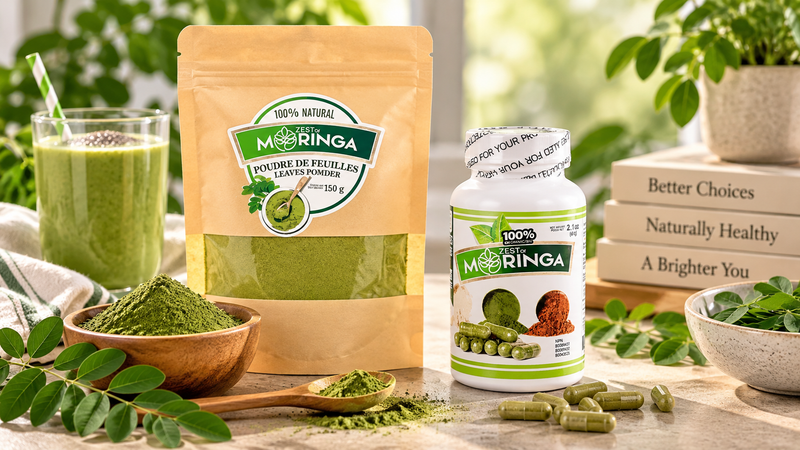
Moringa leaf powder is made by grinding dried leaves into a fine powder. The powder itself is consumed when mixed into food or beverages.
These formats are not nutritionally identical because brewing tea does not extract every component of the whole leaf.
If you enjoy herbal drinks, tea may be more convenient.
If you prefer smoothies and recipes, leaf powder may be more versatile.
Can You Drink Moringa Tea Every Day?
Many people enjoy herbal teas regularly, but individual needs and product formulations vary.
Follow the serving and preparation instructions provided with the product.
People who are pregnant or breastfeeding, take prescription medications, or have an existing medical condition should discuss concentrated botanical products or regular medicinal use with an appropriate healthcare professional.
Natural products are not automatically suitable for everyone.
How to Choose Quality Moringa Tea
When shopping for moringa leaf tea, consider several factors.
Check the Ingredients
If you want pure moringa tea, look for a product made from moringa leaves without unnecessary additional ingredients.
Confirm the Plant Part
Moringa leaf tea should be clearly identified as a leaf-based product.
Moringa roots, bark, and seeds are different plant materials and should not be treated as interchangeable.
Check Organic Information
If organic sourcing is important to you, look for appropriate certification or reliable product information.
Read Brewing Instructions
A quality tea product should provide clear preparation directions.
Avoid Exaggerated Claims
Be cautious about products promising detoxification, rapid weight loss, or cures for medical conditions.
Moringa tea is best understood as an herbal beverage, not a miracle treatment.
Buying Moringa Tea in Canada
If you're looking for moringa tea in Canada, consider more than the product's marketing claims.
Check the ingredient list, package size, shipping information, and product directions.
Buying from a Canadian retailer may make customer service, pricing, and delivery information easier to understand.
Zest of Moringa offers moringa leaf tea for customers looking to explore this botanical beverage.
Frequently Asked Questions
Is moringa tea the same as green tea?
No. Moringa tea comes from Moringa oleifera, while green tea comes from Camellia sinensis.
Does moringa tea contain caffeine?
Pure moringa leaf tea is naturally caffeine-free. However, blends may contain caffeinated ingredients, so check the label.
Is moringa tea better than green tea?
Neither is universally better. Moringa tea may be preferable if you want to avoid caffeine, while green tea may appeal to people who enjoy its flavour and naturally occurring caffeine.
Can I drink moringa tea at night?
Pure moringa tea is naturally caffeine-free, making it a possible evening beverage. However, it is not a proven treatment for sleep problems.
What does moringa tea taste like?
Moringa tea has an earthy, leafy, herbal flavour. Lemon, mint, and ginger can complement its taste.
Can I drink moringa tea every day?
Follow the product's serving instructions and consider your individual circumstances, particularly if you take medications or have a medical condition.
Is moringa tea good for weight loss?
There is insufficient high-quality human evidence to establish that drinking moringa tea alone causes meaningful weight loss.
The Bottom Line
When comparing moringa tea vs. green tea, the most important difference is caffeine.
Pure moringa leaf tea is naturally caffeine-free.
Green tea naturally contains caffeine and has a different botanical composition.
Both beverages contain plant compounds and offer distinct flavours.
If you want a caffeine-free herbal drink, moringa tea may be an appealing choice.
If you enjoy traditional tea and prefer some caffeine, green tea may better suit your routine.
The best choice is the one that matches your taste preferences and daily habits.
Discover Zest of Moringa Leaf Tea
Looking for a naturally caffeine-free herbal beverage?
Explore Zest of Moringa Leaf Tea, made from moringa leaves and designed for a simple tea-drinking routine.
Enjoy it hot or chilled, and experiment with lemon, ginger, or mint to discover your preferred preparation.
Pure leaves. Simple rituals. Naturally Moringa.

0 Comments