

Moringa Seeds Benefits: Nutrition, Uses & How to Eat Them
Moringa is often associated with green leaf powder and herbal tea, but the leaves are only one part of the Moringa oleifera tree that people use.
Moringa seeds are another interesting part of the plant. Found inside the tree's long pods, these seeds have traditionally been used in different ways and are now available as natural or roasted moringa seeds.
If you've never tried them, you may be wondering: What are the benefits of moringa seeds? Can you eat them? What do they taste like? And how are they different from moringa powder?
Here's a practical introduction to moringa seeds and how they can fit into your routine.
What Are Moringa Seeds?
Moringa seeds come from the pods produced by the Moringa oleifera tree.
As the pods mature, they contain individual seeds that can be harvested and prepared for different purposes.
Depending on the product, you may find:
- natural moringa seeds
- dried moringa seeds
- roasted moringa seeds
- salted roasted moringa seeds
- moringa seeds intended for planting
That last distinction is important.
If you plan to eat moringa seeds, make sure you purchase a product specifically sold and labelled for food consumption.
Can You Eat Moringa Seeds?
Some moringa seeds are prepared and sold as food.
One of the easiest forms to enjoy is roasted moringa seeds.
Roasting changes both the texture and flavour, making the seeds more suitable as a snack.
However, moringa seeds have a distinctive taste, so they are quite different from familiar snack foods such as peanuts or sunflower seeds.
Always follow the serving instructions on the specific moringa seed product you purchase.
What Do Moringa Seeds Taste Like?
This is often the first surprise for people trying them.
Moringa seeds can have a strong, earthy and slightly bitter flavour.
Roasting can make the texture crunchier and change the flavour profile, while a small amount of salt can make them more approachable as a snack.
Their unusual flavour is part of the experience.
If you're new to them, start with a small serving rather than expecting them to taste like conventional roasted nuts.

What Are the Benefits of Moringa Seeds?
Interest in moringa seed benefits comes from the natural composition of the seeds.
Like many plant seeds, moringa seeds contain naturally occurring oils and plant compounds.
They should not, however, be treated as a miracle food or a replacement for a varied diet.
The most practical way to think about edible moringa seeds is as another plant-based food that can add variety to your diet.
1. Moringa Seeds Contain Naturally Occurring Plant Compounds
Plants produce many different compounds as part of their natural biology.
Moringa oleifera has attracted considerable interest because different parts of the tree including its leaves and seeds contain naturally occurring phytochemicals.
This is one reason researchers continue studying the moringa plant.
For everyday consumers, though, it is more useful to focus on incorporating moringa sensibly into an overall balanced diet rather than expecting a particular food to produce dramatic health effects.
2. Roasted Moringa Seeds Offer a Different Way to Enjoy Moringa
Not everyone wants to drink moringa tea or add green powder to a smoothie.
That's where roasted moringa seeds provide something different.
They can be eaten directly as a snack, making them one of the simplest ways to experience another part of the moringa tree.
There's no blender, tea infuser or recipe required.
Open the package, follow the recommended serving information, and enjoy.
3. They Can Add Variety to a Plant-Focused Diet
Eating well doesn't require finding one perfect "superfood."
Variety matters.
Fruits, vegetables, whole grains, legumes, nuts, seeds and other plant foods each provide different nutrients and plant compounds.
Edible moringa seeds can simply be another option within that larger variety.
That is a more realistic approach than expecting moringa or any single ingredient to replace a balanced diet.
Natural Moringa Seeds vs. Roasted Moringa Seeds
Zest of Moringa offers both natural and roasted moringa seeds, so understanding the distinction is useful.
Natural Moringa Seeds
Natural seeds remain closer to their original form.
Depending on how a particular product is labelled, natural seeds may be purchased for different purposes, so always check whether they are specifically intended for consumption.
Roasted Moringa Seeds
Roasted moringa seeds have undergone an additional preparation step that changes their texture and flavour.
When specifically produced and labelled as food, roasted seeds provide a convenient ready-to-eat option.
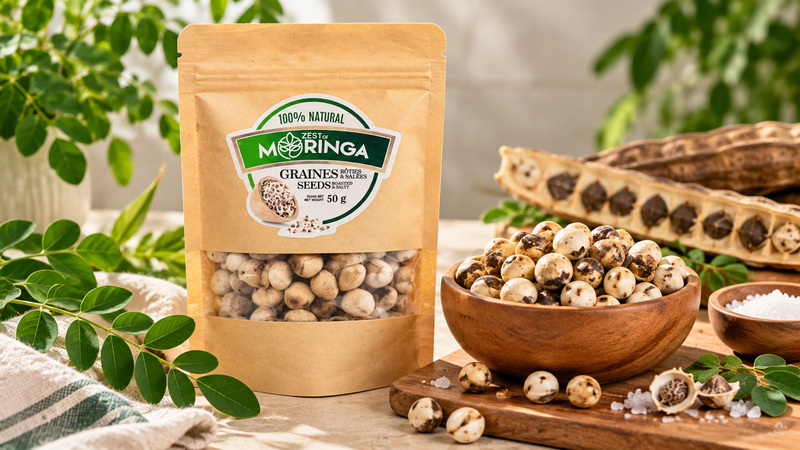
Zest of Moringa's roasted and salted moringa seeds, for example, are designed as a snack.
Moringa Seeds vs. Moringa Leaf Powder
Both products come from the Moringa oleifera tree, but they're made from completely different parts of the plant.
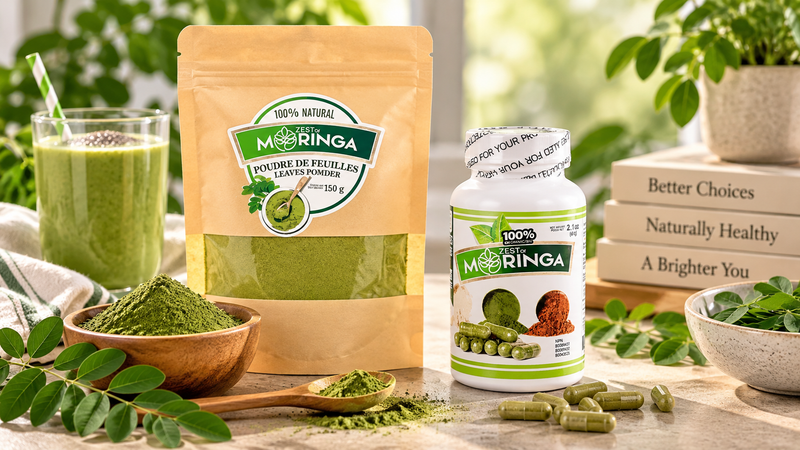
Moringa leaf powder is produced by drying and grinding moringa leaves.
It is commonly mixed into:
- smoothies
- juices
- yogurt
- oatmeal
- soups
- recipes
Moringa seeds, on the other hand, come from the tree's pods.
Edible roasted seeds can be consumed directly as a snack.
Neither product needs to be considered "better." They simply offer different ways of incorporating moringa into your routine.
Moringa Seeds vs. Moringa Oil
Here's another interesting connection.
Moringa oil is produced from moringa seeds.
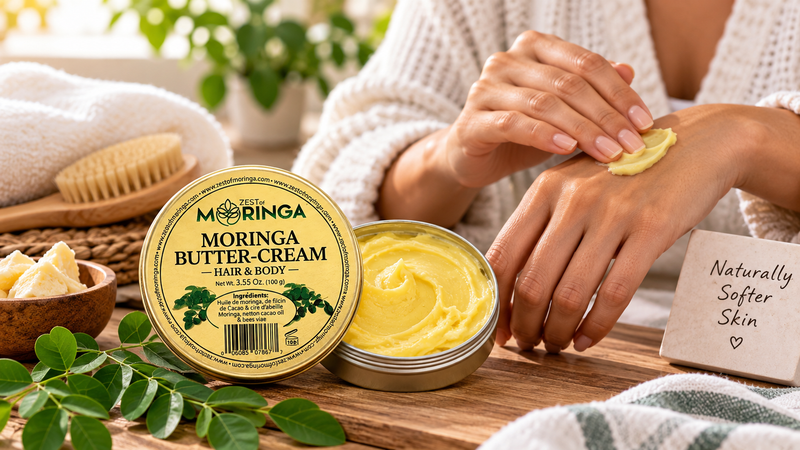
The seeds naturally contain oil that can be extracted and used in cosmetic and personal-care products.
That means the same tree can provide very different products.
The leaves can become tea or powder, while seeds can be prepared in certain edible forms or pressed to produce moringa oil.
This versatility is one of the reasons Moringa oleifera is such an interesting plant.
How to Eat Roasted Moringa Seeds
If your moringa seeds are specifically sold as a ready-to-eat food, the simplest option is usually the best.
Eat them directly according to the serving directions on the package.
You can also experiment with incorporating appropriately prepared edible seeds into your routine.
For example, enjoy them alongside other foods as part of a snack rather than treating them as a supplement that needs to be consumed in large quantities.
How Many Moringa Seeds Should You Eat?
More isn't automatically better.
There isn't a universal serving amount that should be applied to every moringa seed product.
Preparation methods and products can differ, so follow the serving directions provided on the package you purchase.
If you're trying edible moringa seeds for the first time, taking a conservative approach also gives you an opportunity to become familiar with their distinctive flavour.
Can You Eat Moringa Seeds Every Day?
Whether a food belongs in your everyday routine depends on the product, serving size, the rest of your diet and your individual circumstances.
If you regularly consume edible moringa seeds, follow the product's directions rather than increasing the quantity because you expect greater benefits.
Moringa seeds should complement dietary variety not replace it.
People who are pregnant or breastfeeding, use prescription medication, or have a medical condition should consult an appropriate healthcare professional before regularly consuming concentrated botanical products if they have concerns.
Are Moringa Seeds the Same as Moringa Pods?
No.
The seed grows inside the moringa pod.
Young moringa pods are themselves used as food in some cuisines and are sometimes called drumsticks because of their long shape.
As the pod matures, the seeds inside can be harvested.
So although moringa pods and moringa seeds come from the same tree, the terms don't describe the same part of the plant.
What Should You Look for When Buying Moringa Seeds?
Start with the intended use.
If you want seeds to eat, look for a product clearly prepared and labelled for consumption.
If you want roasted seeds as a snack, check the ingredient list to understand exactly what has been added during preparation.
You should also consider sourcing, packaging and storage instructions.
Clear product information is more useful than dramatic promises about what the seeds supposedly do.
Why Is Moringa Called the Miracle Tree?
You may sometimes see Moringa oleifera described as the "miracle tree."
The nickname reflects the remarkable number of ways different parts of the tree have traditionally been used.
Its leaves, seeds and pods all have different applications, while oil can be extracted from its seeds.
However, "miracle tree" should not be interpreted literally.
Moringa is a fascinating and versatile plant not a miracle treatment for disease.
The Bottom Line
The benefits of moringa seeds are best understood in the context of a varied diet.
Moringa seeds provide another way to explore the Moringa oleifera plant beyond familiar products such as moringa powder and tea.
For people who want something convenient, roasted moringa seeds specifically prepared for consumption provide a distinctive plant-based snack with an earthy flavour and crunchy texture.
If you're exploring moringa for the first time, you don't need to make it complicated.
Start small, follow the product directions, and see how moringa fits naturally into your routine.
Discover Zest of Moringa Roasted Seeds
Explore Zest of Moringa Roasted & Salty Moringa Oleifera Seeds, prepared as a convenient 50 g snack.
Or explore our other moringa products to discover the many different ways Moringa oleifera can become part of your everyday routine.
Simple. Plant-based. Naturally Moringa.
0 Comments