

Moringa Root Powder: Uses, Benefits & What You Should Know
When most people hear the word moringa, they think of green moringa leaf powder, tea, or capsules.
But Moringa oleifera is an entire tree, and different parts of the plant have been used traditionally for different purposes.
One of the less familiar products is moringa root powder.
That raises several important questions: What is moringa root powder? Is it the same as moringa leaf powder? How has moringa root traditionally been used? And are there important precautions to understand before using it?
This guide explains the differences and why you shouldn't assume every part of the moringa tree can be used in the same way.
What Is Moringa Root Powder?
Moringa root powder is produced from the root of the Moringa oleifera tree.
That sounds obvious, but the distinction matters because most familiar moringa food products are made from the leaves, not the root.
Moringa leaves are commonly dried and used to make:
- moringa leaf powder
- moringa tea
- moringa capsules
Moringa seeds can be used for other purposes, including producing moringa seed oil.
The root is a completely different part of the plant with a different chemical composition.
For that reason, information about the nutritional benefits of moringa leaves should not automatically be applied to moringa root powder.
Moringa Root vs. Moringa Leaf
This is probably the most important distinction to understand.
When you search online for moringa benefits, many articles discuss the nutritional characteristics of moringa leaves.
Those benefits don't automatically describe the root.
Moringa Leaf
Moringa leaves are widely used as food in different parts of the world.
They can be dried and ground into the familiar deep-green powder used in smoothies and recipes.
Leaves are also used to prepare herbal tea.
Moringa Root
Moringa root comes from the underground portion of the plant.
It has been used traditionally in various preparations, but it shouldn't be treated as simply another version of moringa leaf powder.
The root contains different naturally occurring compounds, which means it also requires different safety considerations.
What Does Moringa Root Look Like?
Fresh moringa root doesn't resemble the bright green leaves most people associate with moringa.
Once dried and ground, moringa root powder generally has a lighter, earthier appearance than green moringa leaf powder.
This is another reason consumers should read product labels carefully.
The colour and appearance of a botanical powder can help identify what part of the plant you're actually purchasing, but the label should always be your primary source of information.
What Does Moringa Root Taste Like?
Moringa root has traditionally been associated with a strong, pungent flavour.
The flavour is quite different from the leafy, earthy taste of moringa leaf powder.
This characteristic is sometimes compared with horseradish, which helps explain one of moringa's traditional English names: the horseradish tree.
That doesn't mean moringa root and horseradish are the same plant.
They aren't.
The comparison simply reflects aspects of the root's distinctive flavour.
What Are the Traditional Uses of Moringa Root?
Moringa has a long history of traditional use in regions where the tree grows.
Different parts of the plant have historically been used for different culinary and traditional purposes.
However, traditional use shouldn't automatically be interpreted as proof that a botanical product is appropriate for unlimited consumption or capable of treating a medical condition.
Modern consumers should distinguish between:
traditional use,
food use, and
clinically established medical treatment.
Those aren't interchangeable concepts.
What Are the Benefits of Moringa Root Powder?
This is where careful language matters.
There is significantly more mainstream nutritional interest around moringa leaves than there is around using moringa root as an everyday food.
Research has investigated compounds present in different parts of Moringa oleifera, including the roots.
But early laboratory or traditional-use information shouldn't be converted into promises that moringa root powder can prevent, cure, or treat disease.
A responsible approach is to consider moringa root as a distinct botanical ingredient rather than presenting it as a miracle supplement.

Moringa Root Powder vs. Moringa Leaf Powder
Although their names are similar, these products should not be confused.
| Moringa Root Powder | Moringa Leaf Powder |
|---|---|
| Made from the root | Made from the leaves |
| Different chemical composition | Nutrient-rich leafy plant material |
| Stronger, pungent character | Earthy, leafy flavour |
| Requires additional safety consideration | Commonly used as a food ingredient |
| Not interchangeable with leaf powder | Used in smoothies and recipes |
If you're looking for a moringa product primarily for everyday nutrition, moringa leaf powder is the form more commonly used as food.
Moringa Root vs. Moringa Powder
When a product is simply advertised as "moringa powder," check the label.
In most wellness and food contexts, moringa powder refers to powdered moringa leaves.
But don't assume.
Look for wording such as:
Moringa oleifera leaf powder
or
Moringa oleifera root powder
That one word leaf or root makes a major difference.
Is Moringa Root Safe?
Moringa root requires more caution than ordinary moringa leaf foods.
Different parts of the plant contain different compounds, and root preparations should not be assumed to have the same safety profile as moringa leaves consumed as food.
Anyone considering using moringa root internally should follow the exact directions and warnings associated with the specific product.
If you're uncertain about whether the product is appropriate for you, consult a qualified healthcare professional or pharmacist before using it.
Moringa Root and Pregnancy
This deserves its own section.
Moringa root and root preparations should generally be avoided during pregnancy unless specifically directed by an appropriately qualified healthcare professional.
Pregnancy is not the time to experiment with concentrated botanical products based on information from social media or general wellness websites.
If you're pregnant, trying to become pregnant, or breastfeeding, show the actual product and its ingredients to your physician, pharmacist, midwife, or other qualified healthcare provider before using it.
Can Moringa Root Interact With Medication?
Botanical ingredients can potentially interact with medications.
Research on specific moringa-root interactions remains limited, which is itself a reason for caution rather than a reason to assume there is no interaction.
If you take prescription medication, speak with your physician or pharmacist before regularly using concentrated botanical preparations.
Do not stop or change prescribed medication in order to use moringa.
Natural Doesn't Automatically Mean Risk-Free
This principle is especially important with roots, herbs, and botanical extracts.
Plants naturally produce biologically active compounds.
The word natural describes origin; it doesn't guarantee that every quantity or preparation is appropriate for every person.
The same applies to moringa.
Moringa leaves being used as food doesn't prove that every other part of the tree should be consumed in the same way.
Why Are Different Parts of Moringa So Different?
Plants aren't chemically uniform.
A tree's roots perform different biological functions from its leaves, seeds, flowers, and bark.
As a result, the concentration and types of naturally occurring compounds can differ substantially between plant parts.
This is why responsible botanical information should always specify whether research or traditional use concerns:
- leaves
- seeds
- seed oil
- pods
- bark
- roots
Simply saying "moringa" can sometimes be too vague.
Moringa Root vs. Moringa Seeds
Moringa seeds develop inside the tree's pods.
They have different applications from the root.
Certain moringa seeds are prepared specifically for consumption, while seeds can also be pressed to produce moringa oil used in skin and hair care.
The root does not serve the same purpose.
Again, the fact that all of these ingredients come from Moringa oleifera doesn't make them interchangeable.
Moringa Root vs. Moringa Oil
These are completely different products.
Moringa root powder comes from the root.
Moringa oil is typically pressed from the seeds.
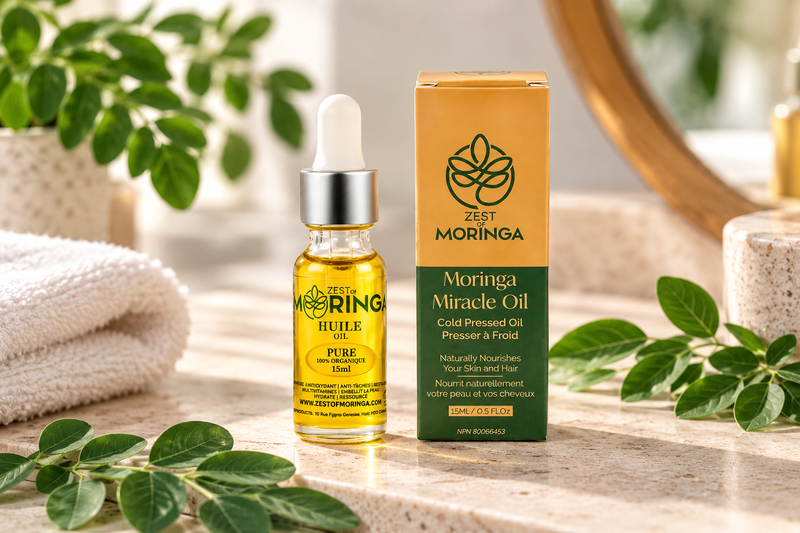
Moringa seed oil is commonly used externally as a cosmetic ingredient to moisturize and condition skin and hair.
If you're searching for moringa for facial skincare or hair care, seed oil—not root powder—is generally the relevant product category.
How to Choose a Moringa Root Product
If you're shopping for moringa root powder, transparency is particularly important.
Identify the Plant Part
The label should clearly state that the product contains moringa root rather than simply saying "moringa."
Read All Directions and Warnings
Don't skip this section.
The instructions for a root product shouldn't be copied from the instructions for moringa leaf powder.
Check the Complete Ingredient List
Determine whether you're buying pure root powder or a blend containing other botanical ingredients.
Avoid Exaggerated Medical Claims
Be cautious of products claiming moringa root can cure serious diseases or replace medical treatment.
Understand the Intended Use
Don't assume a botanical product is intended to be consumed simply because it is sold online.
Follow its labelled intended use.
Which Moringa Product Is Right for You?
The answer depends on what you're trying to do.
For Smoothies and Food
Choose moringa leaf powder specifically intended as food.
For Herbal Tea
Choose moringa leaf tea.
For Convenience
Moringa leaf capsules may offer an alternative to powder when used according to their directions.
For Skin and Hair
Choose an appropriately labelled moringa seed oil or moringa cosmetic product.
For Moringa Root
Treat it as its own botanical category and pay particular attention to the product's directions, warnings, and intended use.
Understanding these distinctions is much more useful than assuming one form of moringa can do everything.
Frequently Asked Questions
Is moringa root the same as moringa powder?
Usually not. Products simply called moringa powder commonly refer to ground moringa leaves. Moringa root powder is made specifically from the root. Always check the label.
Is moringa root the same as moringa leaf?
No. They are different parts of the Moringa oleifera tree and have different chemical compositions and uses.
Why is moringa called the horseradish tree?
One reason is the pungent character historically associated with its root. Moringa and horseradish are nevertheless different plants.
Can you use moringa root during pregnancy?
Moringa root preparations warrant particular caution during pregnancy and should generally be avoided unless specifically directed by an appropriately qualified healthcare professional.
Can I replace moringa leaf powder with root powder?
No. The products shouldn't be considered interchangeable.
Is moringa root used for skincare?
If your goal is skincare, moringa seed oil is the moringa ingredient more commonly used cosmetically. Root powder and seed oil are completely different products.
The Bottom Line
The most important thing to understand about moringa root powder is that it isn't simply another version of moringa leaf powder.
Moringa oleifera is a remarkably versatile tree, but its leaves, seeds, oil, pods, and roots are different materials with different uses and safety considerations.
Moringa leaves are widely used as food.
Seeds can have specific applications and produce moringa oil.
The root requires greater caution and shouldn't automatically inherit the nutritional or safety claims associated with moringa leaves.
Before using a moringa root product, understand exactly what you're buying, follow its labelled directions and warnings, and seek professional guidance when pregnancy, medication, or a medical condition is involved.
With botanicals, knowing which part of the plant you're using matters.

0 Comments