

Moringa Side Effects: Is Moringa Safe? An Honest Guide
Moringa has become a popular ingredient in powders, teas, capsules and other wellness products. But before adding something new to your daily routine, it makes sense to ask an equally important question:
Is moringa safe?
For most people, moringa leaves used as a food are different from taking highly concentrated extracts or using other parts of the plant. The amount consumed, the form of moringa, medications, pregnancy and individual health conditions can all matter.
Here is a practical look at moringa side effects, precautions and situations where you should speak with a healthcare professional.
What Is Moringa?
Moringa oleifera is a tree whose leaves, seeds, pods and other parts have been used traditionally in various regions of the world.
Today, some of the most familiar moringa products include:
- moringa leaf powder
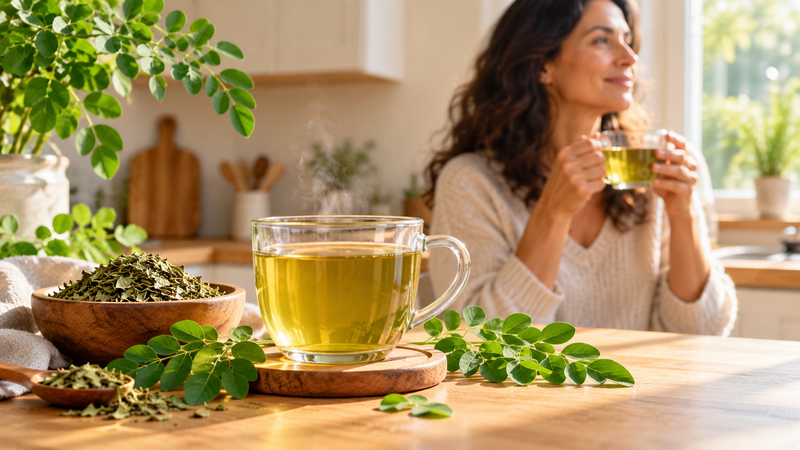
- moringa leaf tea
- moringa capsules
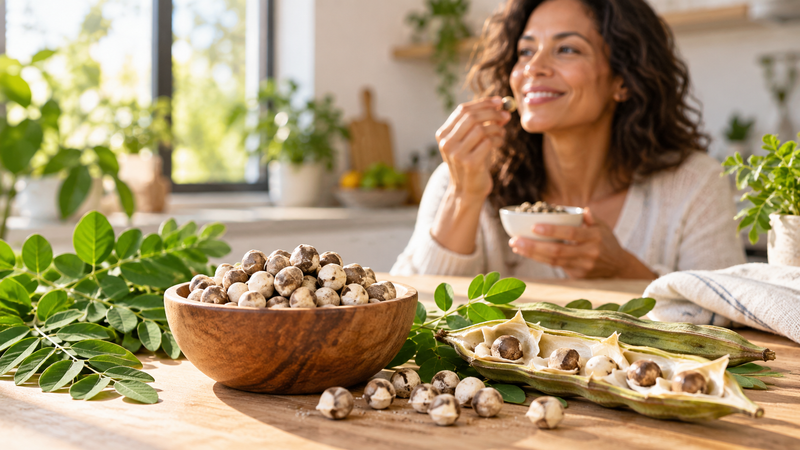
- edible moringa seeds
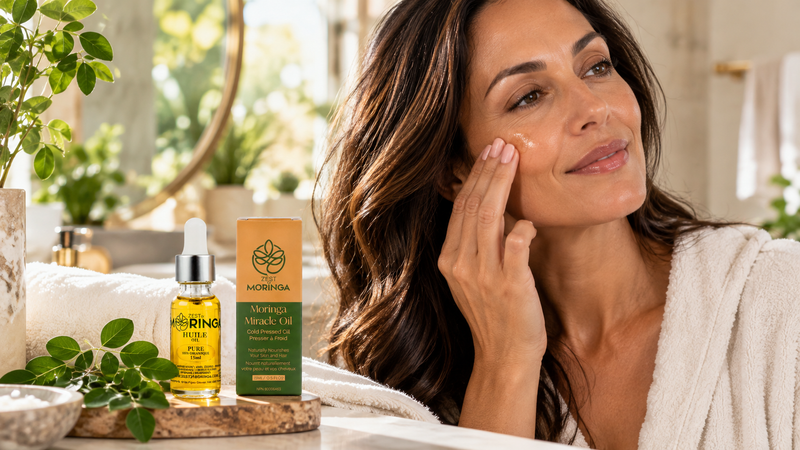
- moringa seed oil
These products are not interchangeable.
A powdered moringa leaf used in food, for example, is very different from a concentrated botanical extract. Likewise, moringa oil intended for cosmetic use shouldn't be treated as an edible moringa product unless its label specifically says so.
That distinction is important when discussing moringa safety.
Is Moringa Safe?
Moringa leaves have a history of use as food, but that doesn't mean every moringa product or every quantity is appropriate for everyone.
How safely you can use a product depends on factors including:
- which part of the moringa plant is used
- how the product was processed
- serving size
- other supplements you use
- medications you take
- pregnancy or breastfeeding
- individual health conditions
The safest approach is straightforward: use a clearly labelled product, follow its directions and avoid assuming that taking more will provide greater benefits.

What Are the Possible Side Effects of Moringa?
People searching for moringa side effects often expect a long list of dramatic reactions.
In reality, potential effects depend considerably on the product and amount consumed.
As with many foods and botanical products, some people may experience digestive discomfort when introducing moringa or consuming larger quantities.
Possible gastrointestinal complaints may include:
- stomach discomfort
- nausea
- loose stools
- diarrhea
- digestive upset
Individual responses vary.
If you're introducing moringa powder into your diet, following the product's recommended serving rather than immediately consuming large quantities is a sensible approach.
If symptoms occur or persist, discontinue use and speak with a healthcare professional.
Can Too Much Moringa Cause Problems?
More isn't necessarily better.
This principle applies to moringa just as it does to many foods, supplements and botanical ingredients.
A product being described as "natural" does not mean unlimited quantities are appropriate.
If you're using moringa powder, moringa tea or moringa capsules, follow the serving information on the specific product.
Avoid dramatically increasing the amount because you believe it will produce faster or stronger results.
Moringa Powder Side Effects
Moringa powder is generally made by drying and grinding Moringa oleifera leaves.
Because you consume the leaf itself rather than simply steeping and removing it as you would with tea, serving size matters.
For some people, introducing a concentrated green leaf powder may cause digestive discomfort, particularly when consumed in larger amounts.
If you've never used moringa leaf powder before, incorporate it according to the product directions rather than adding large spoonfuls to smoothies immediately.
Moringa Tea Side Effects
Moringa leaf tea is prepared by steeping dried moringa leaves in water.
Pure moringa leaf tea is naturally caffeine-free, which distinguishes it from black tea, green tea and matcha.
However, caffeine-free does not automatically mean that every herbal product is suitable for everyone.
Check the ingredients if you're using a tea blend because additional herbs may have their own precautions.
People taking medication or managing a health condition should ask their healthcare professional whether regularly consuming a particular herbal product is appropriate for them.
What About Moringa Capsules?
Capsules offer a convenient way to consume moringa without its distinctive earthy taste.
However, their convenience also makes it particularly important to follow the labelled directions.
Don't assume that taking several additional capsules will provide additional benefits.
Also check exactly what the capsule contains.
A straightforward moringa leaf capsule is different from a supplement containing multiple botanical extracts or additional active ingredients.
Can Moringa Interact With Medications?
This is one area where caution is appropriate.
Botanical products can potentially interact with medications, and research into many specific moringa-drug combinations remains limited.
If you take prescription medications particularly medicines used to manage blood sugar, blood pressure or other ongoing conditions talk with your physician or pharmacist before regularly using concentrated moringa supplements.
Do not stop or modify prescribed medication in order to use moringa.
Your pharmacist can be particularly useful for checking possible interactions between supplements and your current medications.
Moringa and Pregnancy: Is It Safe?
Questions about moringa and pregnancy deserve special attention because different parts of the moringa plant are not equivalent.
Traditional uses of moringa leaves as food should not be generalized to the root, bark or concentrated extracts.
In particular, moringa root and root preparations should be avoided during pregnancy unless specifically directed by an appropriately qualified healthcare professional.
If you're pregnant or trying to become pregnant, don't rely on general internet advice to decide whether a concentrated botanical supplement is appropriate.
Speak with your physician, midwife, pharmacist or other qualified prenatal healthcare professional about the exact product you are considering.
Is Moringa Safe During Pregnancy?
There isn't a useful one-word answer that applies to every moringa product.
A food containing moringa leaves is not necessarily equivalent to a capsule, concentrated extract, root product or multi-ingredient supplement.
That is why searching simply for “is moringa safe during pregnancy?” can produce confusing answers.
The most cautious approach during pregnancy is to show the actual product and ingredient list to your prenatal healthcare provider before using it.
This is particularly important for products containing parts of the plant other than the leaves.
What About Moringa While Breastfeeding?
The same principle applies while breastfeeding.
Don't assume that a botanical product is automatically appropriate because it is natural or traditionally consumed.
If you're breastfeeding and considering regular moringa supplementation, discuss the specific product, ingredients and serving amount with your healthcare professional.
Moringa Leaves vs. Moringa Root
This distinction deserves emphasis.
Moringa oleifera is an entire plant not one ingredient.
Its:
Leaves are commonly consumed as food and used to produce moringa powder and tea.
Seeds can have different culinary and non-culinary applications depending on preparation.
Seeds also produce moringa oil, which is commonly used in skincare and hair-care products.
Roots and bark contain a different chemical profile from the leaves and should not be casually treated as interchangeable with moringa leaf foods.
When researching moringa safety online, always check which part of the plant the information actually refers to.
Is Moringa Oil Safe for Skin?
Moringa seed oil is commonly used as a cosmetic ingredient for skin and hair.
But even botanical skincare ingredients can cause irritation or sensitivity in some individuals.
If you've never used moringa oil before, consider performing a small patch test before applying it broadly to your face or body.
Stop using the product if you develop irritation.
People with diagnosed skin conditions or significant sensitivities may want to consult a dermatologist before introducing unfamiliar skincare ingredients.
Who Should Be Extra Careful With Moringa?
Extra caution is sensible if you:
- are pregnant or breastfeeding
- take prescription medication
- have an existing medical condition
- have experienced reactions to botanical products
- are considering a concentrated extract
- are considering moringa root or bark products
This doesn't automatically mean you cannot use moringa.
It means your individual circumstances matter more than generic advice from a blog or social-media post.
How to Use Moringa Responsibly
You don't need to be afraid of botanical foods, but you should treat them sensibly.
Read the Label
Know whether you're buying leaf powder, tea, capsules, seeds, oil or another preparation.
Follow Serving Directions
Don't dramatically increase the recommended amount in pursuit of faster results.
Check the Ingredient List
A product marketed around moringa may contain several other ingredients.
Introduce New Foods Gradually
This can make it easier to notice how your body responds.
Ask About Medication Interactions
Your pharmacist or physician can help if you're taking medication.
Be Particularly Careful During Pregnancy
Discuss concentrated botanical products with your prenatal healthcare provider before using them.
Does “Natural” Mean No Side Effects?
No.
Natural describes where something comes from. It doesn't guarantee that a substance cannot produce unwanted effects or interact with medication.
Coffee is natural and contains caffeine.
Many herbs are natural and contain biologically active compounds.
Moringa is no different in that respect.
The better question isn't simply, “Is moringa natural?”
It is:
What product am I using, how much am I consuming, and is it appropriate for me?
How to Choose a Moringa Product
When purchasing moringa, transparency matters.
Look for products that clearly state:
- which part of the plant is used
- the ingredient list
- serving or usage directions
- product quantity
- appropriate storage information
Avoid products making extraordinary promises about curing diseases, producing extreme weight loss or replacing medical treatment.
Moringa doesn't need exaggerated claims to be an interesting plant.
Frequently Asked Questions
Does moringa have side effects?
Some people may experience digestive discomfort when consuming moringa products, particularly depending on the form and quantity used. Individual responses vary.
Is moringa safe to take every day?
That depends on the specific product, serving amount and individual circumstances. Follow the manufacturer's directions and discuss regular supplement use with a healthcare professional if you take medication or have a medical condition.
Can I take moringa while pregnant?
Pregnancy requires additional caution, particularly with moringa root, bark and concentrated botanical preparations. Discuss the exact product with your prenatal healthcare professional before using it.
Can moringa interact with medication?
Potential interactions are possible with botanical supplements. If you take prescription medication, ask your physician or pharmacist about the specific moringa product before regularly using it.
Is moringa tea safer than capsules?
They are different preparations, so it isn't useful to declare one universally safer. Ingredients, concentration, quantity and individual circumstances all matter.
Can I use moringa oil on my face?
Moringa seed oil is used cosmetically, but skin reactions are possible with any botanical ingredient. Patch testing is a sensible precaution when trying a new skincare product.
The Bottom Line
So, is moringa safe?
The answer depends on what part of the plant you're using, how it has been prepared, how much you're consuming and your individual circumstances.
Moringa leaves have a long history as food, but that shouldn't be interpreted as proof that every moringa extract, root preparation or supplement is suitable for everyone.
Use clearly labelled products, follow their directions, avoid the idea that more is automatically better, and seek professional guidance when pregnancy, medication or an existing health condition is involved.
An informed approach to moringa is far more useful than either treating it as a miracle ingredient or being unnecessarily afraid of it.
0 Comments