

Moringa Root Powder vs. Moringa Leaf Powder: What’s the Difference?
Moringa powder isn't always the same product.
When most people hear moringa powder, they picture the familiar deep-green powder added to smoothies and recipes. That product is generally made from the leaves of the Moringa oleifera tree.
But moringa root can also be dried and ground into powder.
Although both products come from the same tree, moringa root powder and moringa leaf powder are very different in appearance, composition, traditional use and safety considerations.
If you're trying to decide which type of moringa is appropriate for you, understanding that distinction is essential.
What Is Moringa Leaf Powder?
Moringa leaf powder is produced by harvesting the leaves of the Moringa oleifera tree, drying them and grinding them into a fine green powder.
Moringa leaves have traditionally been consumed as food in different regions of the world.
Today, leaf powder is commonly added to:
- smoothies
- juices
- yogurt
- oatmeal
- soups
- sauces
- other recipes
Because the whole dried leaf is ground, moringa leaf powder has a distinctive green appearance and earthy, leafy flavour.
What Is Moringa Root Powder?
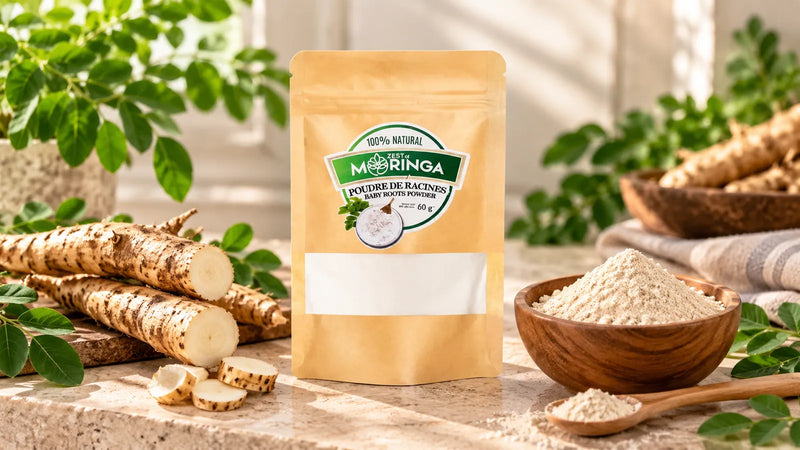
Moringa root powder comes from the root of the same Moringa oleifera tree.
The roots are harvested, dried and processed into a lighter-coloured powder.
But the fact that both powders come from the same tree does not mean they can be used interchangeably.
Roots and leaves perform completely different biological functions within a plant, and their naturally occurring chemical compounds can differ.
This distinction is particularly important when discussing safety.
Moringa Root Powder vs. Moringa Leaf Powder at a Glance
| Moringa Leaf Powder | Moringa Root Powder | |
|---|---|---|
| Plant part | Leaves | Root |
| Typical colour | Deep natural green | Pale beige/cream |
| Flavour | Earthy and leafy | Stronger and more pungent |
| Common use | Food and beverages | Specialized botanical use |
| Smoothies | Commonly used | Not interchangeable with leaf powder |
| Tea | Leaves commonly used | Different preparation |
| Safety considerations | Common food ingredient | Requires greater caution |
| Pregnancy | Discuss concentrated products with a healthcare professional | Root preparations should generally be avoided unless professionally directed |
This is why simply searching for "moringa powder benefits" without identifying the plant part can sometimes produce confusing information.
The Most Obvious Difference: Colour
One of the easiest ways to visually understand the difference is colour.
Moringa Leaf Powder Is Green
Leaves contain chlorophyll, giving quality moringa leaf powder its characteristic green appearance.
The exact shade can vary depending on growing conditions, harvesting, drying and processing.
It should look naturally green, not artificially neon.
Moringa Root Powder Is Pale
Root powder generally has a much lighter beige or cream appearance.
If you place moringa root powder vs. moringa leaf powder beside each other, the difference should be immediately noticeable.
But appearance alone isn't enough to identify a product reliably.
Always read the label.
Their Nutritional Profiles Aren't the Same
One of the biggest mistakes people make is taking information about moringa leaves and applying it to every part of the plant.
Moringa leaves naturally contain a variety of nutrients and plant compounds.
This is why most conversations about the nutritional benefits of moringa powder are actually discussions about moringa leaf powder.
Moringa root has a different composition.
You shouldn't assume that a nutritional statement about moringa leaves also describes the root.
Why Is Moringa Leaf Powder So Popular?
Convenience is a major reason.
Moringa leaf powder allows the whole dried leaf to be incorporated into foods without having to prepare fresh moringa leaves.
A small amount can easily be mixed into an existing meal or drink.
For example, a simple smoothie might include:
- banana
- berries or mango
- milk or plant-based beverage
- moringa leaf powder
- ice
Its versatility makes leaf powder particularly practical for everyday food use.

What Does Moringa Leaf Powder Taste Like?
Moringa leaf powder has a distinctive earthy and green flavour.
If you've tried other leafy green powders, the general flavour profile may feel familiar.
Some people enjoy it mixed simply with water, while others prefer combining it with stronger flavours.
Banana, mango, pineapple, berries and yogurt can help balance the earthy taste in smoothies.
What Does Moringa Root Powder Taste Like?
Moringa root traditionally has a stronger, more pungent character.
Historically, this pungency contributed to Moringa oleifera sometimes being called the horseradish tree.
Moringa and horseradish are not the same plant.
The nickname simply reflects the traditionally noted character of the root.
This is another example of why root powder shouldn't be viewed simply as pale-coloured leaf powder.
Which Moringa Powder Is Better for Smoothies?
If you're looking for moringa specifically to add to smoothies and everyday foods, moringa leaf powder is the familiar food format.
It combines easily with fruits, vegetables and other smoothie ingredients.
Root powder should not automatically be substituted into recipes that call for moringa leaf powder.
If a recipe says "moringa powder," check whether it specifically means leaf powder.
In most smoothie and wellness recipes, it does.
Which Moringa Powder Is Better for Everyday Nutrition?
For ordinary nutritional use, moringa leaves are the part of the tree commonly consumed as food.
That makes moringa leaf powder the more relevant product when someone is searching for a green food powder to incorporate into meals.
That doesn't mean everyone needs moringa powder.
A varied diet containing fruits, vegetables, whole grains, proteins and other plant foods remains the foundation of good nutrition.
Moringa can simply provide another source of dietary variety.
Is Moringa Root Powder a Superfood?
The term superfood is primarily a marketing term rather than a formal scientific classification.
It's particularly important not to transfer the reputation of moringa leaves directly to the root.
If you see extraordinary claims about moringa root powder curing diseases, rapidly changing hormones or replacing medical treatment, approach them cautiously.
Botanical products don't need miracle claims to be interesting.
Is Moringa Root Powder Safe?
Moringa root deserves greater caution than ordinary moringa leaf foods.
Different plant parts contain different compounds, and traditional use doesn't automatically establish that unlimited or concentrated consumption is appropriate.
Anyone considering a moringa root product should:
- identify exactly what the product contains
- understand its intended use
- read all warnings
- follow its specific directions
- avoid assuming leaf-powder serving instructions apply to root powder
If you're unsure whether a root product is appropriate for you, consult a qualified healthcare professional or pharmacist.
Moringa Root Powder and Pregnancy
This is one of the most important differences between root and leaf discussions.
Moringa root and root preparations should generally be avoided during pregnancy unless specifically directed by an appropriately qualified healthcare professional.
Don't assume that because moringa leaves are consumed as food, the root automatically has the same safety profile.
If you're pregnant, breastfeeding or trying to become pregnant, discuss the exact botanical product with your healthcare provider before using it.
What About Medication?
Botanical ingredients may interact with medications.
Evidence regarding many specific moringa-root interactions remains limited.
Limited evidence shouldn't be interpreted as proof that an interaction is impossible.
If you take prescription medication or manage an ongoing health condition, discuss concentrated botanical products with your physician or pharmacist.
Never discontinue prescribed medication in order to use moringa.
Moringa Leaf Powder vs. Moringa Capsules
There is another distinction worth understanding.
Some moringa capsules simply contain moringa leaf powder inside a capsule shell.
That means leaf powder and capsules can sometimes provide similar botanical material in different formats.
Powder provides versatility for food and smoothies.
Capsules provide convenience and avoid the earthy flavour.
However, always check the capsule ingredients because formulations vary.
Moringa Leaf Powder vs. Moringa Tea
These products can both originate from moringa leaves, but you consume them differently.
With moringa leaf powder, you consume the ground leaf itself.
With moringa tea, dried leaves are steeped in hot water and normally removed before drinking.
Pure moringa leaf tea is naturally caffeine-free because moringa doesn't come from the traditional tea plant, Camellia sinensis.
Moringa Root vs. Moringa Seed Oil
These products are completely different again.
Moringa root powder: comes from the root.
Moringa leaf powder: comes from the leaves.
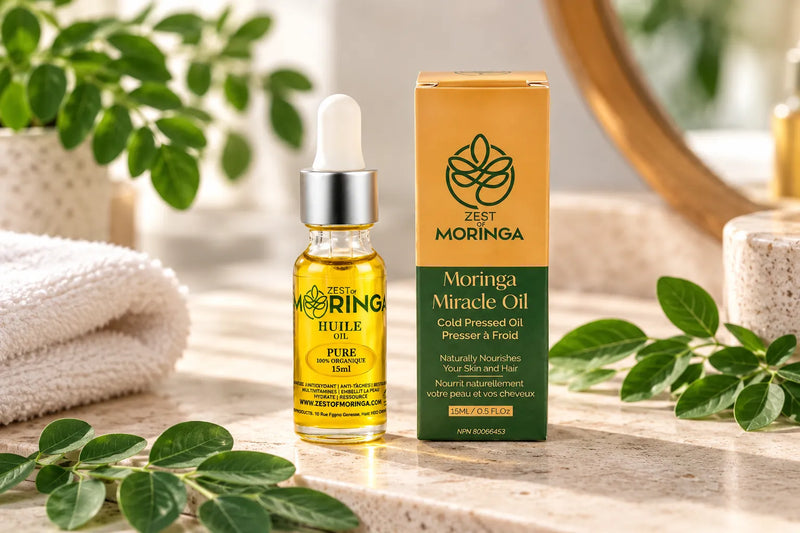
Moringa oil: is typically pressed from the seeds.
Moringa seed oil is commonly used cosmetically to moisturize and condition skin and hair.
Understanding which part of the plant produces each product makes the entire moringa category much easier to understand.
How to Tell Which Moringa Powder You're Buying
Don't rely solely on the front image.
Check the product description and ingredient list.
Look specifically for language such as:
Moringa oleifera leaf powder
or
Moringa oleifera root powder
If the listing simply says "moringa powder" without identifying the plant part, look for additional information before purchasing.
Transparency matters.
How to Choose Moringa Leaf Powder
If you're shopping for organic moringa leaf powder, consider:
Ingredient Simplicity
If you want pure moringa, the ingredient list should make that clear.
Plant Part
Confirm that the product uses moringa leaves.
Appearance
Expect a naturally green botanical powder.
Usage Directions
The package should clearly explain how the product is intended to be used.
Organic Information
If organic sourcing matters to you, look for appropriate certification or product information rather than assuming "natural" means organic.
How to Choose Moringa Root Powder
For root powder, safety and transparency become even more important.
Look for clear identification of the root ingredient.
Read the complete instructions and warnings.
Determine whether the product is intended for the use you have in mind.
And don't use information about leaf powder to determine how much root powder to use.
They're different products.
Which One Should You Choose?
It depends entirely on what you're looking for.
Choose Moringa Leaf Powder If:
You want moringa for smoothies, foods or recipes and are looking for the commonly consumed leafy part of the plant.
Consider Root Products Separately If:
You're specifically looking for moringa root and understand that its uses, composition and safety considerations differ from the leaves.
Don't choose root powder simply because you assume it is a stronger version of leaf powder.
It isn't.
Frequently Asked Questions
Is moringa root powder the same as moringa leaf powder?
No. Root powder comes from the root of Moringa oleifera, while leaf powder comes from its leaves. They differ in appearance, composition, traditional uses and safety considerations.
Which moringa powder is green?
Moringa leaf powder is naturally green. Root powder generally has a much lighter beige or cream appearance.
Which moringa powder goes in smoothies?
Moringa leaf powder is the form commonly used in smoothies and food recipes.
Is moringa root stronger than moringa leaf?
"Stronger" isn't a useful comparison. They contain different compounds and serve different purposes.
Can I replace moringa leaf powder with root powder?
No. They shouldn't be treated as interchangeable ingredients.
Is moringa root safe during pregnancy?
Root preparations warrant particular caution during pregnancy and should generally be avoided unless specifically directed by an appropriately qualified healthcare professional.
Is moringa oil made from the root?
No. Moringa oil is typically produced by pressing the seeds of the Moringa oleifera tree.
The Bottom Line
When comparing moringa root powder vs. moringa leaf powder, the most important thing to remember is simple:
Same tree does not mean same product.
Moringa leaf powder is green, made from dried leaves and commonly incorporated into foods and smoothies.
Moringa root powder comes from an entirely different part of the tree, has a different appearance and composition, and requires greater attention to safety and intended use.
Knowing the difference helps you choose the appropriate product and prevents nutritional information about moringa leaves from being incorrectly applied to the root.
With moringa, the plant part matters.
0 Comments