

Argan oil is the face oil most people already know. Moringa oil, once called ben oil, is the one perfumers and watchmakers relied on for centuries because it stayed fresh. Both are golden, both come from trees that grow in hot, dry climates, and both are sold as premium face oils. But they are not the same oil, and the differences are measurable.
This guide compares cold-pressed moringa oil and cosmetic argan oil using published lab analyses and human skin studies, not marketing claims. Where argan wins, we say so.
Quick Answer
- Choose moringa oil if you want a richer oil for dry or mature skin, an oil that resists going rancid, and a rare fatty acid profile (high oleic acid plus behenic acid).
- Choose argan oil if you want more vitamin E and more linoleic acid, which many people with combination skin prefer.
- Use both if you like: they complement each other rather than compete.
Moringa Oil vs Argan Oil: Side-by-Side
| Compared on | Moringa oil (cold-pressed) | Argan oil (cosmetic, unroasted) |
|---|---|---|
| Oleic acid (omega-9) | 72 to 78% | 41 to 55% |
| Linoleic acid (omega-6) | About 1 to 4% | 27 to 37% |
| Behenic acid | 3.7 to 6.7% | Not reported |
| Vitamin E (total tocopherols) | About 200 to 280 mg/kg | 324 to 667 mg/kg |
| Resistance to rancidity | Very high (very little omega-6) | Moderate (rich in omega-6) |
| Human skin study | +85% skin hydration (32 people, 4 weeks) | Better skin elasticity (60 women, 60 days) |
| Feel on skin | Rich, cushioning | Often described as lighter |
Values vary with origin, harvest and processing. Sources are listed at the end of this article.
How Moringa Compares With Other Popular Face Oils
Argan is only one option. Here is how cold-pressed moringa oil compares with the five face oils people ask us about most, on the same criteria.
| Compared on | Moringa (cold-pressed) | Argan | Jojoba | Rosehip | Grapeseed | Olive |
|---|---|---|---|---|---|---|
| Behenic acidA rare fatty acid, named after ben (moringa) oil | 3.7 to 6.7%Moringa leads | Not reported | Not reported | Not reported | 0.5% max | 0.2% max |
| Oleic acid (omega-9)The nourishing, skin-softening fatty acid | 72 to 78% | 41 to 55% | Liquid wax, about 14% | 15 to 22% | 12 to 28% | 55 to 83% |
| Resistance to rancidityLab oxidation test (Rancimat) | 34 h at 120 °C (8 to 10 h in other tests) | More fragile: 27 to 37% omega-6 | 9.5 h at 130 °C | 3.5 h at 110 °C | 4.1 h at 110 °C | 7.9 h at 120 °C |
| Vitamin ETotal tocopherols, mg/kg | 200 to 280 | 324 to 667 | Not verified | 786 | 140 (tocopherols); 240 to 410 incl. tocotrienols | Varies widely |
| Human skin studyPublished, topical use | +85% hydration (32 people, 4 weeks) | Elasticity (60 women, 60 days) | Hydration (32 people, 2 weeks) | Limited data | Little human data | Mixed results |
Values vary with origin and processing. Oxidation tests run at different temperatures are not directly comparable. Sources: Tsaknis 1999; Anwar 2006; Athikomkulchai 2021; Azizi 2022; Zaanoun 2014; Codex Stan 210 and 33; Kiralan 2019; Turan 2018; Boucetta 2015; Vaughn 2018.
What Is Moringa Oil?
Moringa oil is pressed from the seeds of Moringa oleifera. Historically it was known as ben oil, and it gave its name to behenic acid, a long-chain fatty acid first identified in it in the 19th century. A 1918 edition of the United States Dispensatory noted that the oil "keeps long without becoming rancid". That stability is why it was valued in fine perfumery and to lubricate clocks and watches.
Its profile is unusual: about three quarters oleic acid, a meaningful share of behenic acid, and almost no polyunsaturated fat. That combination explains both its rich feel and its stability.
What Is Argan Oil?
Argan oil comes from the kernels of Argania spinosa, a tree native to southwestern Morocco. Cosmetic argan oil is pressed from unroasted kernels, while culinary argan oil is made from roasted kernels. It is a balanced oil: roughly half oleic acid and about a third linoleic acid, with a high level of vitamin E, mostly in the gamma-tocopherol form.
Where Moringa Oil Comes Out Ahead
1. It stays fresh much longer
Oils go rancid when their polyunsaturated fats oxidize. Moringa oil contains very little of them. In a laboratory oxidation test (Rancimat, 120 °C), cold-pressed moringa oil lasted 34 hours before oxidizing, versus 7.9 hours for virgin olive oil in the same test (Tsaknis et al., 1999). Other studies using different extraction methods report lower values, around 8 to 10 hours at the same temperature, which is still very stable for a liquid plant oil.
Argan oil, with about a third polyunsaturated fat, is more fragile. One study found that cosmetic (unroasted) argan oil oxidized about 2.5 times faster than roasted argan oil (Zaanoun et al., 2014). For you, a stable oil means a bottle that smells and performs the same from the first drop to the last.
2. Behenic acid, which argan does not offer
Cold-pressed moringa oil contains 3.7 to 6.7% behenic acid. It is one of very few plant oils with a meaningful amount. Behenic acid is a long-chain saturated fatty acid used in cosmetics for its conditioning, cushioning feel. Argan oil analyses do not report it.
3. A direct human hydration study
In a 4-week study on 32 volunteers, a cream containing 25% moringa seed oil increased skin hydration by 85%, versus 48% for the same cream without moringa oil. No participant showed irritation (Athikomkulchai et al., 2021). The study did not find a change in skin elasticity, and it tested a cream rather than the pure oil, so we present it exactly as it is: a hydration result.
Where Argan Oil Comes Out Ahead
1. More vitamin E
Cosmetic argan oil contains roughly 324 to 667 mg/kg of tocopherols (vitamin E), compared with about 200 to 280 mg/kg in moringa oil. If vitamin E content is your main criterion, argan wins.
2. More linoleic acid
Argan oil provides 27 to 37% linoleic acid, an omega-6 fatty acid naturally present in the skin. Many people with combination or oilier skin prefer linoleic-rich oils. Moringa oil has very little.
3. A longer elasticity study
In a 60-day study on 60 postmenopausal women, argan oil applied to the forearm improved measures of skin elasticity (Boucetta et al., 2015). The comparison was the untreated other forearm, but it remains a larger and longer study than the one available for moringa.
Which One Is Better for Your Skin Type?
- Dry or mature skin: moringa oil. Its high oleic and behenic content gives a richer, more cushioning finish, and the hydration study supports its use as a moisturizing oil.
- Combination or oily skin: argan oil may feel more comfortable thanks to its higher linoleic acid content. If you use moringa oil, one or two drops at night is usually enough.
- Sensitive skin: no irritation was seen in the 32 volunteers of the moringa study. With any new oil, test a small area first.
- Hair ends and cuticles: both work as conditioning oils. Moringa's stability makes it practical to keep in a bathroom where it is exposed to warmth.
Can You Use Moringa Oil and Argan Oil Together?
Yes. Because their fatty acid profiles are so different, they pair well. A simple approach is moringa oil at night, when skin benefits from a richer layer, and argan oil in the morning. You can also mix one drop of each in your palm before applying.
How to Use Moringa Oil on Your Face
- Cleanse and apply your usual water-based serum or moisturizer.
- Warm 2 to 3 drops of moringa oil between your fingertips.
- Press gently onto the face and neck rather than rubbing.
- Use it at night, or in the morning under sunscreen if your skin is dry.
Keep the bottle closed and away from direct sunlight. Pure moringa oil can turn cloudy or partly solid in the cold: this is normal and it becomes clear again at room temperature.
Frequently Asked Questions
Is moringa oil better than argan oil?
It depends on what you want. Moringa oil is more resistant to rancidity, contains behenic acid and suits dry or mature skin. Argan oil contains more vitamin E and linoleic acid. Neither is better on every criterion.
Which oil lasts longer once opened?
Moringa oil. It contains almost no polyunsaturated fat, the part of an oil that oxidizes first, and it performed far better than common plant oils in published oxidation tests.
Does argan oil have more vitamin E than moringa oil?
Yes. Published analyses report about 324 to 667 mg/kg for cosmetic argan oil versus about 200 to 280 mg/kg for moringa oil.
Is moringa oil good for dry skin?
Yes. In a 4-week study, a cream with 25% moringa oil increased skin hydration by 85%, versus 48% for the same cream without it.
Can I use moringa oil on my hair instead of argan oil?
Yes. Both can be used on lengths and ends to soften dry hair. Start with one or two drops, especially on fine hair.
The Bottom Line
Argan oil earned its reputation, and it remains a strong choice for vitamin E and linoleic acid. Moringa oil offers what argan does not: exceptional resistance to rancidity, behenic acid, and a rich, protective feel that suits dry and mature skin. If those matter to you, moringa oil is the better fit.
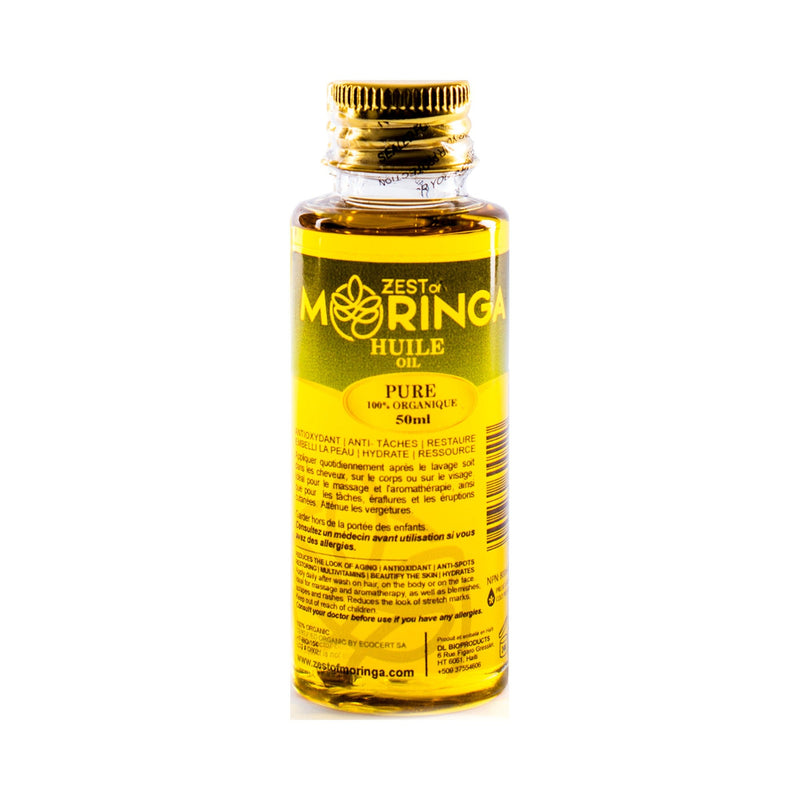
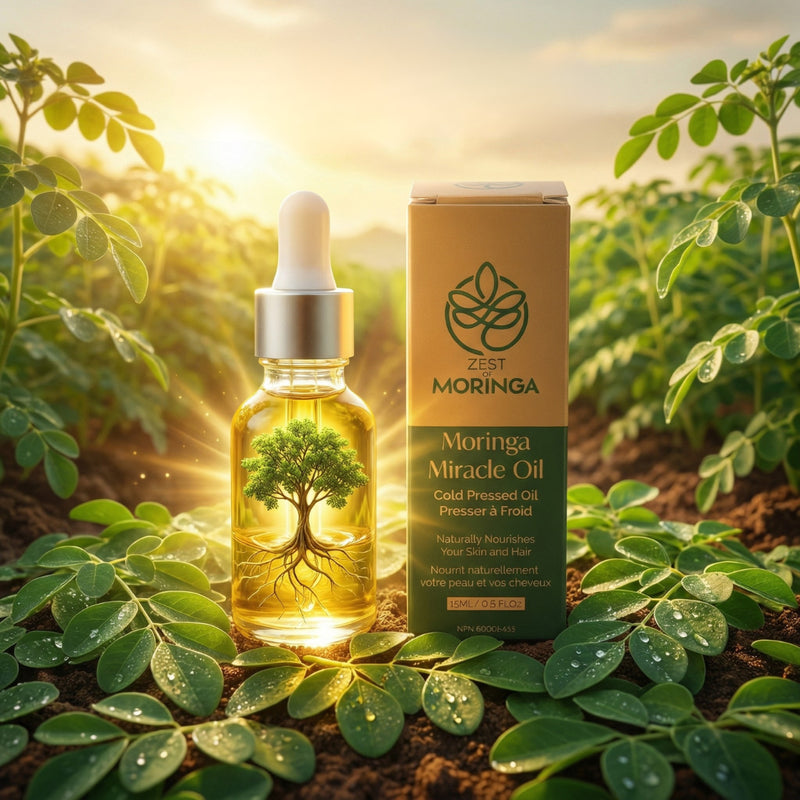
Our Moringa Golden Face Oil is a single-ingredient, cold-pressed moringa seed oil, available in five sizes. See also our guide to using moringa oil on your face and the full skin and hair care collection.
Sources
- Tsaknis J. et al. (1999). Characterization of Moringa oleifera variety Mbololo seed oil of Kenya. Journal of Agricultural and Food Chemistry, 47, 4495 to 4499.
- Anwar F., Zafar S.N., Rashid U. (2006). Characterization of Moringa oleifera seed oil from drought and irrigated regions of Punjab, Pakistan. Grasas y Aceites, 57(2), 160 to 168.
- Athikomkulchai S. et al. (2021). Moringa oleifera seed oil formulation physical stability and chemical constituents for enhancing skin hydration and antioxidant activity. Cosmetics, 8(1), 2.
- Azizi S. et al. (2022). Chemical characterization of oils produced by some native and introduced genotypes of argan tree in eastern Morocco using HPLC-DAD/GC-MS, and the evaluation of their physicochemical parameters. OCL, 29, 14.
- Zaanoun I. et al. (2014). Kinetic parameter determination of roasted and unroasted argan oil oxidation under Rancimat test conditions. Grasas y Aceites, 65(3), e033.
- Boucetta K.Q. et al. (2015). The effect of dietary and/or cosmetic argan oil on postmenopausal skin elasticity. Clinical Interventions in Aging, 10, 339 to 349.
- The Dispensatory of the United States of America (1918). Oleum Moringae.
Cosmetic product. This article is for general information and is not intended to diagnose, treat or prevent any condition.
0 Comments