

Moringa Benefits: A Complete Guide to Moringa Oleifera
Moringa has gone from being a traditional food in many parts of the world to becoming an increasingly familiar ingredient in powders, teas, capsules, oils and natural personal-care products.
The plant behind all of these products is Moringa oleifera, a fast-growing tree whose leaves, seeds and pods have been used in different ways for generations.
But what are the actual moringa benefits? Which part of the plant should you use? And what's the difference between moringa powder, tea, capsules, seeds and oil?
This complete guide explains what moringa is, its nutritional characteristics, the different ways people use it, and what to consider when choosing a moringa product.
What Is Moringa?
Moringa oleifera is a tree native to parts of South Asia and now cultivated in tropical and subtropical regions around the world.
You may have heard it called the moringa tree, drumstick tree, or even the miracle tree.
The plant is unusual because several different parts can be used.
Its leaves can be eaten fresh or dried to produce powder and tea. Its seeds have various uses and can also be pressed to produce moringa oil. Young pods are consumed as food in some cuisines.
This versatility is one reason interest in moringa oleifera benefits has grown considerably.
What Are the Benefits of Moringa?
Much of the interest surrounding moringa benefits begins with the leaves.
Moringa leaves naturally contain a range of nutrients and plant compounds.
These include vitamins, minerals, amino acids, polyphenols and antioxidant compounds, although the exact nutritional composition varies depending on growing conditions, processing and the final product.
Rather than thinking of moringa as a miracle cure, it is more useful to think of it as a versatile plant that can contribute to a varied diet and personal-care routine.
1. Moringa Is a Nutrient-Rich Plant
Moringa leaves contain naturally occurring nutrients, which is why dried moringa leaf powder has become popular as a plant-based food ingredient.
Drying the leaves allows them to be ground into a concentrated green powder.
The powder can then be incorporated into foods and drinks such as:
- smoothies
- yogurt
- oatmeal
- juices
- soups
- sauces
- salad dressings
This makes moringa particularly convenient for people looking for additional variety in their plant-based foods.
2. Moringa Contains Natural Antioxidants
Another reason researchers have become interested in moringa oleifera is its naturally occurring antioxidant compounds.
Antioxidants help protect cells from oxidative stress caused by free radicals.
Moringa isn't unique in providing antioxidants. Fruits, vegetables, herbs, tea and many other plant foods also contain antioxidant compounds.
This is why moringa works best as part of a varied diet rather than as a replacement for other nutritious foods.
3. Moringa Offers Several Ways to Use the Same Plant
One of the most interesting characteristics of moringa is its versatility.
You don't have to consume it in only one form.
Different parts of the plant produce completely different products.
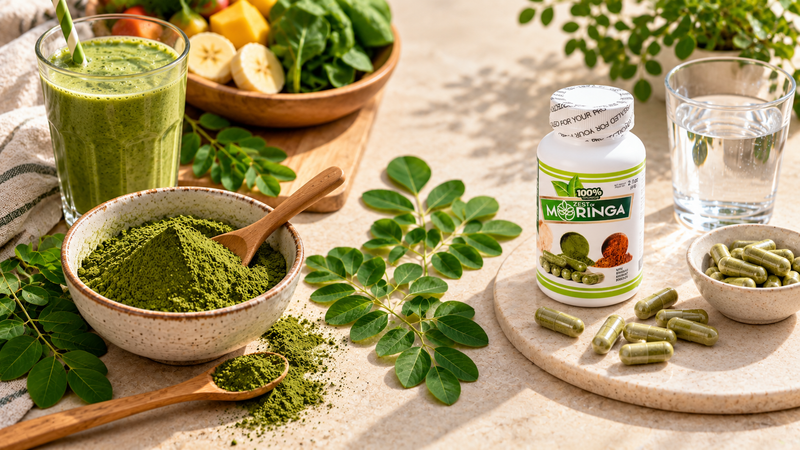
Moringa Leaf Powder
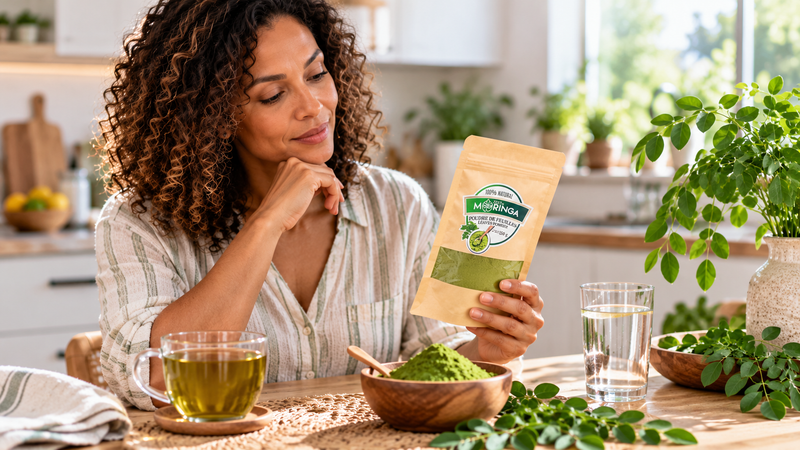
Moringa powder is usually made by drying and grinding moringa leaves.
It can easily be mixed into smoothies, yogurt and recipes.
For people who already make smoothies or green drinks, powder is one of the simplest ways to incorporate moringa into an existing routine.
4. Moringa Leaf Tea Is Naturally Caffeine-Free
Moringa leaves can also be dried and steeped to make moringa tea.
Unlike black tea, green tea and matcha, moringa doesn't come from the Camellia sinensis tea plant.
Pure moringa leaf tea is naturally caffeine-free.
This makes it an interesting herbal drink for people looking for something they can enjoy without adding more caffeine to their day.
Moringa tea can be enjoyed hot or cold and combined with ingredients such as lemon, ginger, mint or honey.
5. Moringa Capsules Offer Convenience
Not everyone enjoys the earthy flavour of moringa powder.
Moringa capsules offer another option.
Capsules provide a convenient format for people who prefer not to mix powder into foods or beverages.
When using any supplement, check the ingredient list and follow the directions provided with the specific product rather than assuming that taking more will provide additional benefits.
6. Moringa Seeds Offer Another Side of the Plant
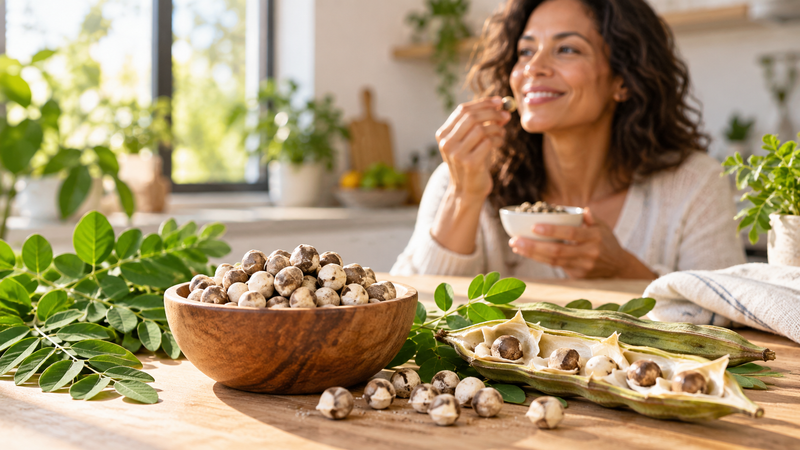
The long pods of the moringa tree contain moringa seeds.
Depending on how they are processed and labelled, seeds can have different uses.
Some are specifically prepared as food, including roasted moringa seeds.
These provide a completely different experience from drinking tea or adding leaf powder to a smoothie.
When purchasing moringa seeds for consumption, make sure the product is specifically prepared and labelled as food.
7. Moringa Seeds Produce Moringa Oil
Moringa's versatility doesn't end with food.
The seeds can be pressed to produce moringa oil, a golden botanical oil commonly used in skin and hair-care routines.
Moringa seed oil contains naturally occurring fatty acids and is valued primarily for its moisturizing and conditioning properties.
A few drops can be used on the face, body, scalp or hair depending on the product directions.
This means moringa can be part of both a nutritional routine and a personal-care routine.

Moringa Benefits for Skin
People searching for moringa benefits for skin are generally referring to moringa seed oil rather than moringa leaf powder.
Botanical oils can help reduce moisture loss and leave dry-feeling skin feeling softer.
Moringa oil can be applied in small amounts after cleansing or incorporated as the final moisturizing step of a skincare routine.
It can also be used on dry areas such as hands, elbows and cuticles.
As with any new skincare product, people with sensitive skin may want to perform a patch test first.
Moringa Benefits for Hair
Moringa seed oil can also be incorporated into a hair-care routine.
A very small amount can be smoothed through dry ends to add conditioning and shine.
Some people also use botanical oils as a pre-shampoo treatment or gently massage them into the scalp.
It is important to distinguish cosmetic conditioning from claims about treating hair loss.
Moringa oil is best understood as a botanical conditioning oil for helping hair feel softer and look healthy.
Moringa Benefits for Women
Searches for moringa benefits for women are common, but moringa isn't inherently a women's product.
Women may choose moringa for many of the same reasons anyone else would: its nutritional characteristics, convenience and versatility.
Moringa leaf powder, for example, can provide an easy way to add another plant-based food to smoothies and meals.
However, pregnancy and breastfeeding require additional consideration.
Pregnant or breastfeeding women should discuss concentrated botanical products with an appropriate healthcare professional before adding them to their routine.
Moringa Benefits for Men
Likewise, moringa benefits for men should be considered within the broader nutritional characteristics of the plant.
Moringa is not a male-specific food.
Men can incorporate moringa leaf powder, tea or other appropriate products into a varied diet in the same way other adults can.
Claims that moringa automatically produces dramatic hormonal or sexual effects should be treated cautiously.
The nutritional value of the plant doesn't require exaggerated promises.
Moringa Powder vs. Tea vs. Capsules
Which moringa product should you choose?
It mainly depends on how you want to use it.
Choose moringa powder if:
You enjoy smoothies, yogurt, oatmeal or recipes and want to consume the ground leaf.
Choose moringa tea if:
You enjoy herbal beverages and want a naturally caffeine-free drink.
Choose moringa capsules if:
Convenience is your priority and you don't enjoy moringa's earthy flavour.
There doesn't need to be one universally "best" form.
The best choice is usually the one that fits naturally into your lifestyle.
Moringa Powder vs. Moringa Oil
These two products are particularly easy to confuse because they come from the same tree.
But they're completely different.
Moringa powder usually comes from the leaves and is consumed as food.
Moringa oil is produced from the seeds and is commonly used externally for skin and hair.
Think of one as a food ingredient and the other primarily as a personal-care ingredient, according to how the specific product is labelled.
How to Use Moringa
One of moringa's biggest advantages is that it doesn't require an elaborate routine.
In a Smoothie
Add moringa leaf powder to a fruit or vegetable smoothie.
Its earthy flavour works particularly well with naturally sweeter fruits such as banana, mango or pineapple.
As Tea
Steep dried moringa leaves in hot water according to the product instructions.
Try adding lemon, ginger or mint.
With Food
Moringa powder can also be mixed into yogurt, oatmeal, soups and other recipes.
As a Snack
Moringa seeds specifically prepared and labelled for consumption can be enjoyed according to their product directions.
For Skin and Hair
Apply a small amount of cosmetic moringa seed oil according to the product instructions.
A few drops may be all you need.
What Does Moringa Taste Like?
Moringa leaves have an earthy, green and slightly herbal flavour.
Some people enjoy it immediately, while others prefer combining it with stronger or sweeter ingredients.
Moringa powder works well with fruits in smoothies.
Moringa tea can be paired with lemon, honey, ginger or mint.
Roasted moringa seeds have their own distinctive earthy and slightly bitter flavour.
There is no requirement to consume moringa plain if another preparation makes it more enjoyable.
Can You Use Moringa Every Day?
Many people incorporate moringa foods into their regular routines.
However, the appropriate amount depends on the product.
A cup of moringa tea, a serving of moringa powder and a moringa capsule are not automatically equivalent.
Follow the directions provided with the specific product you're using.
More is not necessarily better.
Does Moringa Have Side Effects?
Although moringa leaves are consumed as food, some people may experience digestive discomfort from certain moringa products, particularly depending on the quantity consumed.
Different parts of the plant also shouldn't be treated as interchangeable.
The leaves, seeds, roots and bark have different compositions.
People who are pregnant or breastfeeding, take prescription medication, or have an existing medical condition should discuss concentrated botanical products with an appropriate healthcare professional.
How to Choose a Good Moringa Product
The popularity of moringa means there are many products available in Canada and the United States.
Rather than choosing based on dramatic marketing claims, examine the product itself.
Look for:
Clear ingredients You should know exactly which part of the moringa plant you're buying.
Transparent product information Usage and storage directions should be easy to understand.
Appropriate processing Understand whether you're buying leaf powder, tea, seeds, capsules or seed oil.
Responsible claims Be cautious about products promising to cure diseases or produce dramatic results.
Quality moringa doesn't need unrealistic promises.
Is Organic Moringa Worth Considering?
Consumers looking for organic moringa often want a product produced according to organic agricultural standards.
Whether you choose organic or conventional moringa, transparency about sourcing and ingredients remains important.
Check the product label rather than assuming that every product marketed as natural is automatically organic.
Why Is Moringa Called the Miracle Tree?
Moringa oleifera is sometimes called the miracle tree because so many different parts of the plant have traditionally been used.
Its leaves can become food, powder or tea.
Its pods can be eaten.
Its seeds have various uses and can produce oil.
That versatility is remarkable.
But the nickname shouldn't be interpreted literally. Moringa is a useful and interesting plant—not a miracle cure.
Frequently Asked Questions About Moringa
What is moringa good for?
Moringa is primarily valued as a versatile plant. Its leaves are used as food, powder and tea, while its seeds can have culinary applications and can be pressed to produce cosmetic oil.
What are the main moringa benefits?
The leaves naturally contain nutrients and antioxidant plant compounds, while moringa seed oil is used for its moisturizing and conditioning properties.
Is moringa a superfood?
"Superfood" is a marketing term rather than a scientific food category. Moringa is better described as a nutrient-rich plant food.
Can I drink moringa tea every day?
Moringa leaf tea can be incorporated into a regular routine, but follow the preparation and serving instructions on the specific product.
Is moringa tea caffeine-free?
Pure moringa leaf tea is naturally caffeine-free because moringa does not come from the traditional tea plant, Camellia sinensis.
Can moringa be used on skin and hair?
Moringa seed oil is commonly used cosmetically on skin and hair for moisturizing and conditioning.
Which moringa product should beginners try?
That depends on preference. Powder works well in smoothies, tea suits people who enjoy herbal drinks, capsules offer convenience, and moringa oil is intended primarily for skin and hair care when labelled for cosmetic use.
The Bottom Line
The most interesting thing about moringa benefits may be the remarkable versatility of the plant.
Moringa oleifera can provide leaves for powder and tea, seeds for different applications, and a golden seed oil used in natural skin and hair care.
There is no need to treat moringa as a miracle ingredient.
Instead, choose the form that fits your needs, use it according to the product directions, and incorporate it into a balanced diet or personal-care routine.
That's a much more practical way to discover what moringa has to offer.
Discover Zest of Moringa
At Zest of Moringa, we offer a selection of moringa products for different everyday routines, including moringa leaf powder, moringa tea, capsules, seeds and pure moringa oil.
Explore the collection and discover the form of moringa that works best for your routine.
Pure. Simple. Naturally Moringa.
0 Comments